


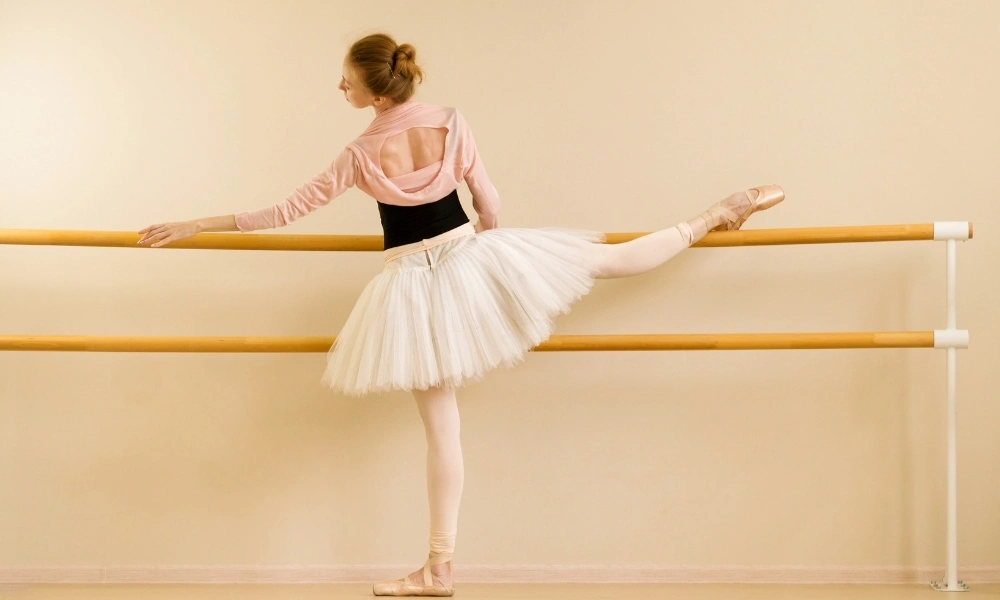
Ballet is often viewed as the pinnacle of strength, control, and artistry. And while that’s true, what many dancers (and even professionals) overlook is this: ballet alone is not enough to support the long-term health and performance demands placed on the body.
The most resilient, powerful dancers are not just training in the studio—they are cross-training outside of it. Even elite dancers like Misty Copeland emphasize the importance of building strength beyond ballet alone. In a recent feature in Woman’s World, Dr. Sarah Crawford highlights how foundational habits like walking, strength work, and mobility support joint health, recovery, and long-term performance—key principles that directly translate to how dancers should approach cross-training.
Why Ballet Needs Support
Ballet requires extreme ranges of motion, repetitive loading, and precise control. Over time, this creates predictable patterns:
- Overuse of certain muscle groups (hip flexors, calves, turnout muscles)
- Underdevelopment of others (glutes, deep core stabilizers)
- High joint stress, especially in the hips, knees, and ankles
Without balance, these patterns can lead to pain, compensation, and ultimately injury.
This is where cross-training becomes essential—not as a replacement for ballet, but as a way to support it.
Movement Variety Protects the Body
From a physical therapy perspective, the body thrives on variability. Just like walking helps maintain natural gait patterns, joint lubrication, and muscular balance , cross-training introduces different movement inputs that ballet alone cannot provide.
When dancers step outside of strictly choreographed movement, they:
- Stimulate joint health through varied loading
- Improve circulation and tissue recovery
- Reinforce foundational movement patterns
This helps prevent the gradual loss of mobility, strength, and coordination that can happen with repetitive training alone.
Strength Where It Matters Most
Ballet demands strength—but not always in a way that builds it optimally.
Cross-training allows dancers to develop:
- Glute strength for hip stability and power
- Core stability for control and balance
- Posterior chain strength (hamstrings, back body) to counteract anterior dominance
These are the exact muscle groups that support longevity and reduce injury risk.
Without this foundation, dancers often rely on compensation strategies—overusing smaller, less efficient muscles to achieve technical positions.
Recovery Is Part of Performance
One of the biggest misconceptions in dance is that more training equals better performance.
In reality, progress happens during recovery.
Incorporating mobility work and stretching after activity supports:
- Circulation and tissue healing
- Nervous system downregulation
- Restoration of joint range of motion
For dancers, this is especially important in areas that accumulate tension:
- Hip flexors (from turnout and développé work)
- Calves (from repetitive relevé and jumping)
- Chest and shoulders (from posture and port de bras)
Cross-training creates space for recovery—something ballet classes rarely prioritize.
Learning to Listen to Your Body
Dancers are trained to push through discomfort—but not all discomfort is productive.
Understanding the difference between soreness and pain is critical:
- Soreness is typically symmetrical, muscular, and improves with movement
- Pain is often sharp, localized, or alters movement patterns
Cross-training provides a controlled environment to build awareness, adjust load, and develop better movement strategies—before issues escalate.
What Cross-Training Should Look Like
It doesn’t have to be complicated.
In fact, the most effective approach mirrors what we recommend for long-term joint health:
- Strength training (2–3x/week): Focus on glutes, legs, and core
- Low-impact movement (most days): Walking, Pilates, or controlled mobility work
- Mobility (daily): Short, consistent sessions to maintain range and reduce stiffness
This kind of routine builds a body that can handle ballet—not just perform it.
The Takeaway
Ballet is an art form—but your body is the instrument.
And like any instrument, it requires maintenance, balance, and support.
Cross-training isn’t about doing more. It’s about doing what’s missing.
Because the goal isn’t just to dance well today— it’s to keep dancing for years to come.
About the Author:
Larisa Durrenberger, PT, MPT
Larisa has been a physical therapist since earning her degree from the University of Missouri in 2004. With over 21 years of experience, she specializes in orthopedics, sports medicine, performing arts medicine, and Pilates.
Inspired by her dance background, she is passionate about helping dancers, athletes, and patients recover, prevent injury, and feel stronger than before. Larisa has trained with leading practitioners, including Jackie Haas, Carolyn Crampton, and the Harkness Center for Performing Arts Medicine in New York City.