


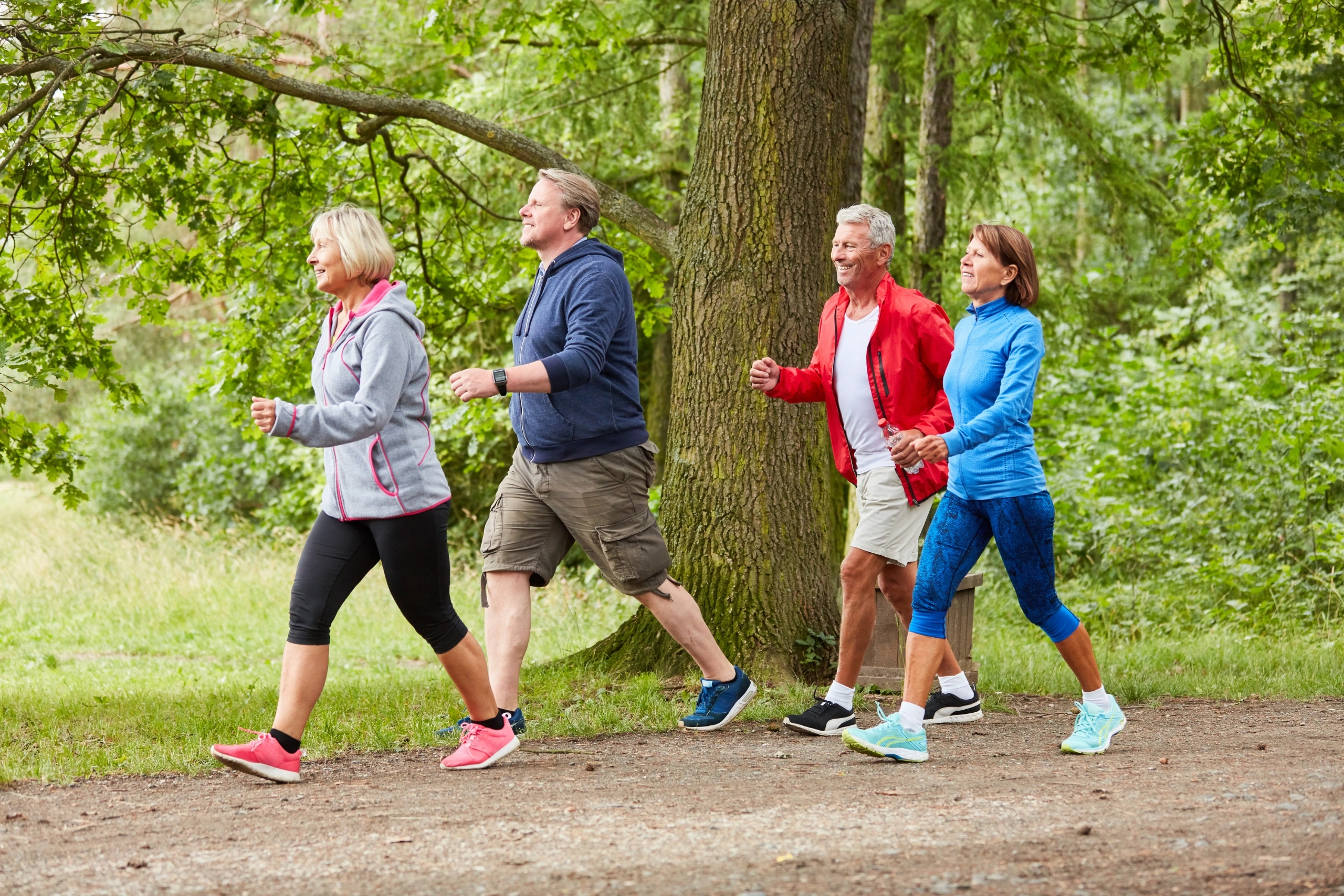
You’ve probably heard it a thousand times: “Just go for a walk.” But if you’ve ever wondered whether your daily stroll is actually doing anything for your heart health — or whether you’re leaving real fitness gains on the table — you’re asking exactly the right question.
The Honest Answer: It Depends on How You’re Walking
Walking can be cardio. But the key variable is how much it elevates your heart rate. A casual walk around the block with your neighbor is wonderful for your mental health and your step count — but it likely won’t push you into an aerobic training zone. A brisk walk with hills thrown in? That’s a different story.
The line between a pleasant stroll and a genuine cardiovascular workout comes down to intensity. And for most people, the default walk doesn’t clear that bar.
What Actually Makes a Cardio Workout “Good”?
Forget the single-metric thinking — cardio quality isn’t just about calories burned or minutes logged. It depends entirely on your goals.
If you’re walking for stress relief or connection with a friend, a lower-intensity, longer-duration walk is genuinely valuable. Don’t discount it. But if your goal is maximum cardiac and metabolic benefit, the research has shifted in an important direction: lower volume, higher intensity training is outperforming the old “150 minutes of moderate activity per week” standard.
What does that look like in practice? Short bursts of high-intensity effort — think 80% of your max heart rate for one to four minutes at a time — interspersed throughout your walk. You can achieve this with hill repeats, picking up your pace for a block or two, or tackling variable terrain. These surges create the cardiovascular stimulus your heart actually needs to adapt and grow stronger.
**WAVE Insight:** *”For maximal cardiac benefit, you may want to consider adding in some bursts of high intensity — around 80% of your max heart rate — for 1–4 minutes at a time. If your goal is long endurance, hanging out in a zone 2 heart rate can be very beneficial.”* — Dr. Molly Gearin, PT, DPT
Walking Alone Isn’t Enough — Here’s the Full Picture
This is where a lot of well-intentioned exercisers hit a ceiling. Walking, even at higher intensities, shouldn’t be your only tool. A truly well-rounded fitness routine combines cardiovascular training with resistance training two to three times per week.
Dr. Gearin’s recommendation is to use walks strategically: as a warm-up or cool-down for your strength sessions, as a mental reset, or as a way to stay connected to your community. When walking is woven into a bigger program — rather than standing alone as your entire fitness strategy — you get far more return on the time you’re investing.
**WAVE Insight:** *”Walking should not be used in isolation for maximal cardiac benefits. I’d incorporate short, high intensity bursts during your walk as well as utilizing walking as part of a well-rounded resistance training program.”* — Dr. Molly Gearin, PT, DPT
A Word of Caution Before You Hit the Trail
One thing that often gets overlooked: terrain matters, and it’s easy to underestimate it. Grass, sand, gravel,
hills, and uneven surfaces all increase the physical demand of a walk significantly — which is great for intensity, but poses real risks for anyone with balance or coordination challenges, or anyone recovering from injury.
And don’t forget the simple physics: you have to walk the same distance back that you went out. Starting too ambitiously is one of the most common ways people end up sidelined. Build gradually, pay attention to how your body responds, and match your terrain to your current fitness and recovery status.
The Bottom Line
Walking is a genuinely valuable form of movement — for your heart, your mind, and your longevity. But whether it qualifies as cardio depends on how you’re doing it, and whether it’s serving your larger fitness goals depends on what else you’re doing alongside it. The smartest walkers aren’t just logging steps — they’re walking with intention.
At WAVE, we don’t hand you a generic exercise printout and send you on your way. Our physical therapists take the time to understand where you are, what you’re working toward, and what your body actually
About the Author:
Dr. Molly Gearin, PT, DPT, CSCS
Molly Gearin is a Cincinnati native, having attended Sycamore High School before pursuing physical therapy
at the University of Dayton. She graduated from UD with a degree in Pre-Physical Therapy in 2019 and stayed there to complete her Doctorate in Physical Therapy in 2022 (Go Flyers!). While in college, she was a member of the Women’s NCAA D-1 Rowing team, as well as the club gymnastics team. She also was fortunate enough to work as an aide at a local, privately owned clinic in Dayton, which helped grow her interest in human performance. Upon completion of her undergraduate degree, she earned her Certified Strength and Conditioning Specialist (CSCS) certification through the NSCA. She worked as a strength coach through grad school, learning how to implement principles of strength programming and periodization, and continues to use those skills with patients today.
Molly worked at an outpatient sports medicine facility near Dayton for four years, where she primarily treated female athletes and active adults beginning a wellness journey. She uses a multimodal approach to therapy, combining principles of manual therapy and strength and conditioning to create a well-rounded treatment. She is passionate about educating her patients on the power of movement and physical therapy, but also educating future healthcare professionals by pursuing teaching roles at UD and taking on clinical students at her practice.