


By Annalise Calo, PT, DPT, OCS
When your nervous system sends pain signals, it’s trying to communicate something important.
But what if the tools you use to support pain relief and recovery could work with that communication system — instead of around it?
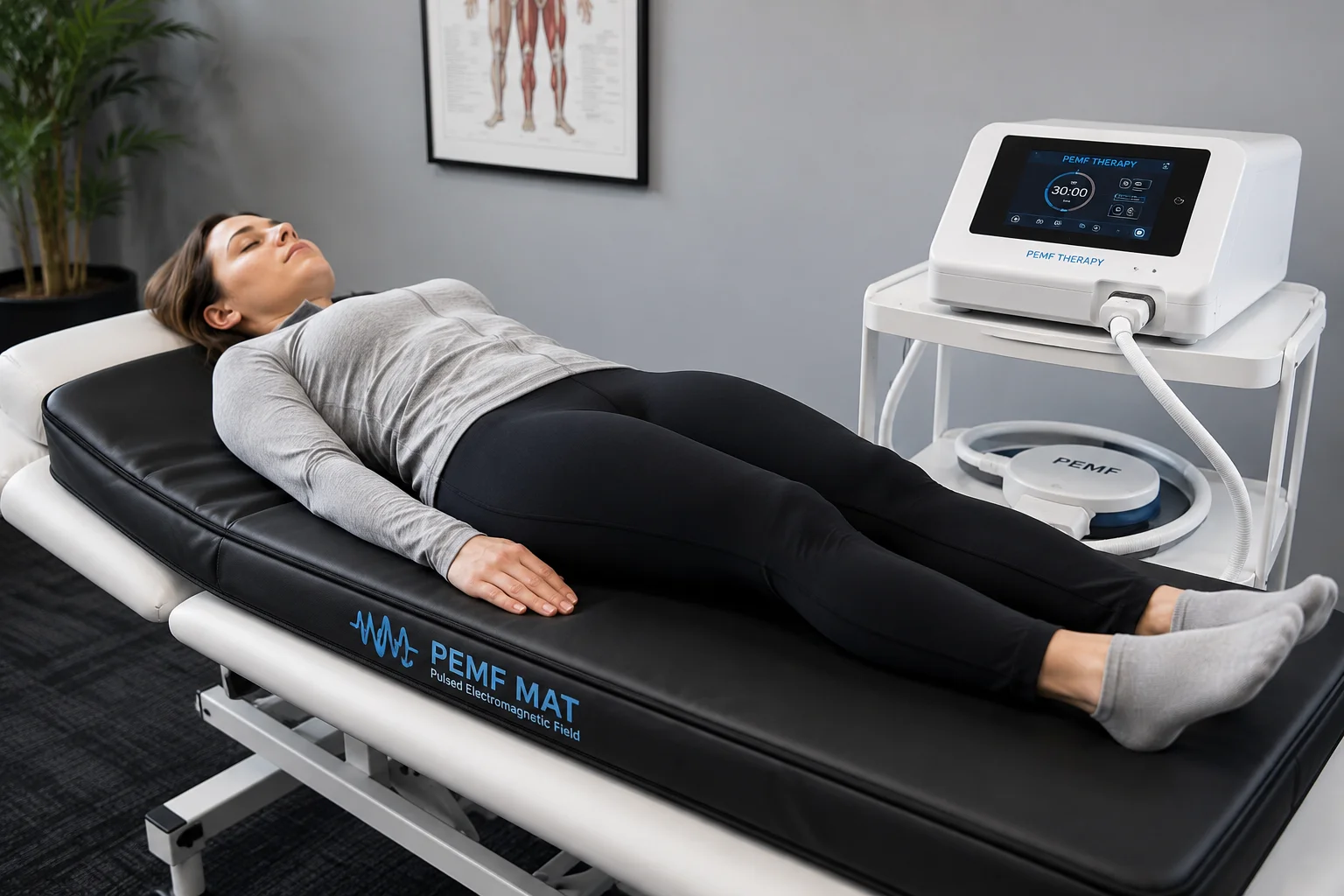
That’s the real question behind PEMF therapy, a recovery technology that’s become increasingly popular among athletes, active adults, and people managing chronic pain — and one that’s built entirely on how your body already talks to itself.
So what exactly is PEMF, and does it have a place in your recovery routine?
At WAVE, we believe recovery tools should complement — not replace — movement, strength, hands-on care, and an individualized treatment plan. Understanding how PEMF actually works, and what it can realistically offer, is the first step in deciding whether it belongs in yours. Prevention recently reviewed the current landscape of PEMF mats and what the technology can and can’t do, and it’s worth a read if you want the consumer-side view alongside ours (Prevention, “Best PEMF Mats”).
What Exactly Is PEMF?
PEMF stands for pulsed electromagnetic field therapy.
PEMF devices deliver electromagnetic fields to the body in pulses. These fields interact with electrically active tissues and biological processes already happening inside you — which is really the whole idea behind the name of this piece. Your body runs on electrical signaling long before any device gets involved.
“PEMF stands for pulsed electromagnetic field therapy. These devices create changing electromagnetic fields that can interact with the body’s naturally occurring electrical and cellular processes.” — Annalise Calo, PT, DPT, OCS
While PEMF can sound like futuristic technology, the concept rests on a basic principle of human physiology: our cells communicate through electrical and chemical signals. PEMF is designed to interact with those processes and may help support the environment in which normal recovery takes place.
The important distinction? PEMF is not a magic fix. It’s a tool that may support the body’s natural recovery processes when it’s used appropriately — and understood correctly.
How Can PEMF Support Pain and Recovery?
PEMF has gained attention largely because of its potential role in supporting tissue recovery and managing pain.
When tissue is irritated or injured, your body kicks off a complex healing process — blood flow, inflammation, cellular activity, and nervous system signaling all play a role, all communicating with each other in real time. Research suggests PEMF may influence several of these processes, including:
- Supporting circulation.
- Modulating inflammatory responses.
- Supporting cellular activity.
- Promoting tissue recovery.
- Helping manage certain types of pain.
But this is where it’s worth looking past the marketing. PEMF should not be viewed as a replacement for movement or rehabilitation. If someone has persistent pain because of weakness, restricted mobility, poor movement mechanics, or an underlying injury, simply lying on a PEMF mat will not address those contributing factors. Instead, PEMF may be one piece of a larger recovery strategy — a supporting voice, not the whole conversation.
Why Your Recovery Environment Matters
Your body does not heal in isolation.
Sleep, nutrition, stress, movement, strength, circulation, and your nervous system all influence how your body responds to injury and recovery — and all of them shape whether a tool like PEMF has anything useful to interact with in the first place.
This is why we take a root-cause approach at WAVE. Rather than asking, “What can I use to make this pain go away?” — we want to ask, “Why is this pain happening, and what does my body need to recover?”
PEMF may be useful as part of that process. For example, someone recovering from an injury may benefit from a combination of:
- Targeted physical therapy.
- Strength and mobility training.
- Manual therapy.
- Appropriate movement progression.
- Recovery strategies.
- Sleep and lifestyle support.
- Adjunctive modalities such as PEMF, when appropriate.
The goal isn’t to find one device that does everything. The goal is to create an environment where your body has the support it needs to keep adapting.
Choosing the Right PEMF Mat
If you’re considering adding PEMF to your recovery routine, it’s important to understand that not all devices — or all claims about them — are the same. A few things worth considering:
Frequency and intensity. PEMF devices operate at different frequencies and intensities, and manufacturers often promote specific settings for specific goals. Rather than assuming a particular frequency is automatically better, look for companies that provide clear information about their technology and the research behind their specific device. Be cautious of vague claims that promise to cure everything from chronic pain to aging.
Size and coverage. Consider how you’ll actually use the device. A larger mat may let you expose more of your body at once, while smaller devices may be easier to target on a specific area. Think about your realistic routine, not just the ideal one.
Research and quality. Look for transparent information about the device — specifications, safety information, and any research supporting its use. Marketing claims alone are not the same thing as clinical evidence.
Your specific goal. Why are you interested in PEMF? Support during injury recovery? Managing persistent pain? Improving your overall recovery routine? Or simply exploring new wellness technology? Your goal should guide whether PEMF makes sense for you, and how it fits into your broader plan.
Can PEMF Replace Physical Therapy?
No — and that’s an important distinction.
PEMF does not replace strengthening, mobility work, movement retraining, or hands-on physical therapy. It also can’t correct a movement pattern, rebuild muscle strength, or teach your body how to move differently. Think of it as a supporting tool, not the entire treatment plan.
For someone with pain or an injury, the most important piece is still understanding what’s contributing to the problem. At WAVE, that means evaluating how you move, identifying limitations, and creating a treatment plan built around your individual needs. PEMF may be part of that plan — but it should have a purpose within it, not just a place on the schedule.
The Root-Cause Approach to Recovery
At WAVE, we don’t believe in chasing symptoms with endless treatments. Pain is information. Sometimes it’s telling you that something needs attention — a strength deficit, a mobility restriction, tissue irritation, a movement compensation, nervous system sensitivity, or another underlying factor.
Our job is to figure out what’s contributing to the problem and determine what your body actually needs to move forward. That may include:
- Manual therapy.
- Strength training.
- Mobility work.
- Movement retraining.
- Recovery strategies.
- Education.
- Regenerative or supportive modalities when appropriate.
PEMF can be one tool in that toolbox. But the most effective recovery plan is the one that addresses the person — not just the symptom.
WAVE Insight: “The best recovery tools are the ones that have a purpose within a larger plan. We want patients to understand what we are doing, why we are doing it, and how it fits into their long-term goals.” — Annalise Calo, PT, DPT, OCS
The Bottom Line
PEMF is an emerging recovery technology that may offer real benefits for pain management, inflammation, circulation, and tissue recovery — which is part of why outlets like Prevention have started covering it for a mainstream audience (see their PEMF mat roundup here). But it is not a replacement for movement, strength training, or physical therapy.
The most important question isn’t simply, “Does PEMF work?” It’s, “Could PEMF be useful for my specific body, goals, and recovery plan?”
At WAVE, we take the time to understand what’s contributing to your symptoms and create an individualized approach to help you move, recover, and feel better. Because the goal isn’t simply to manage pain. It’s to help your body function better for the long term.
About the Author
Annalise Calo, PT, DPT, OCS
Annalise Calo is a physical therapist at WAVE Physical Therapy & Pilates who specializes in helping patients understand the connection between movement, recovery, and long-term health. She takes a root-cause approach to physical therapy, combining individualized treatment, movement education, and evidence-informed strategies to help patients feel stronger, move with confidence, and return to the activities they enjoy.