


By Dr. Sarah Crawford, PT, COMT, CMTPT, CPI, Founder
The Science Behind the Spikes—and Where They Fit Into Your Recovery
If you’ve spent any time on social media lately, you’ve probably seen someone lying on what looks like a yoga mat covered in hundreds of tiny spikes—claiming it helped their back pain, improved their sleep, or melted away stress.
And surprisingly, they may not be wrong.
Acupressure mats have become increasingly popular because they’re accessible, easy to use, and can genuinely help some people feel better. But if you’ve ever wondered how they actually work—or whether they’re worth the hype—the answer is a little more nuanced than a simple yes or no.
Like most things in healthcare, it depends on what you’re expecting them to do.
What Are Acupressure Mats?
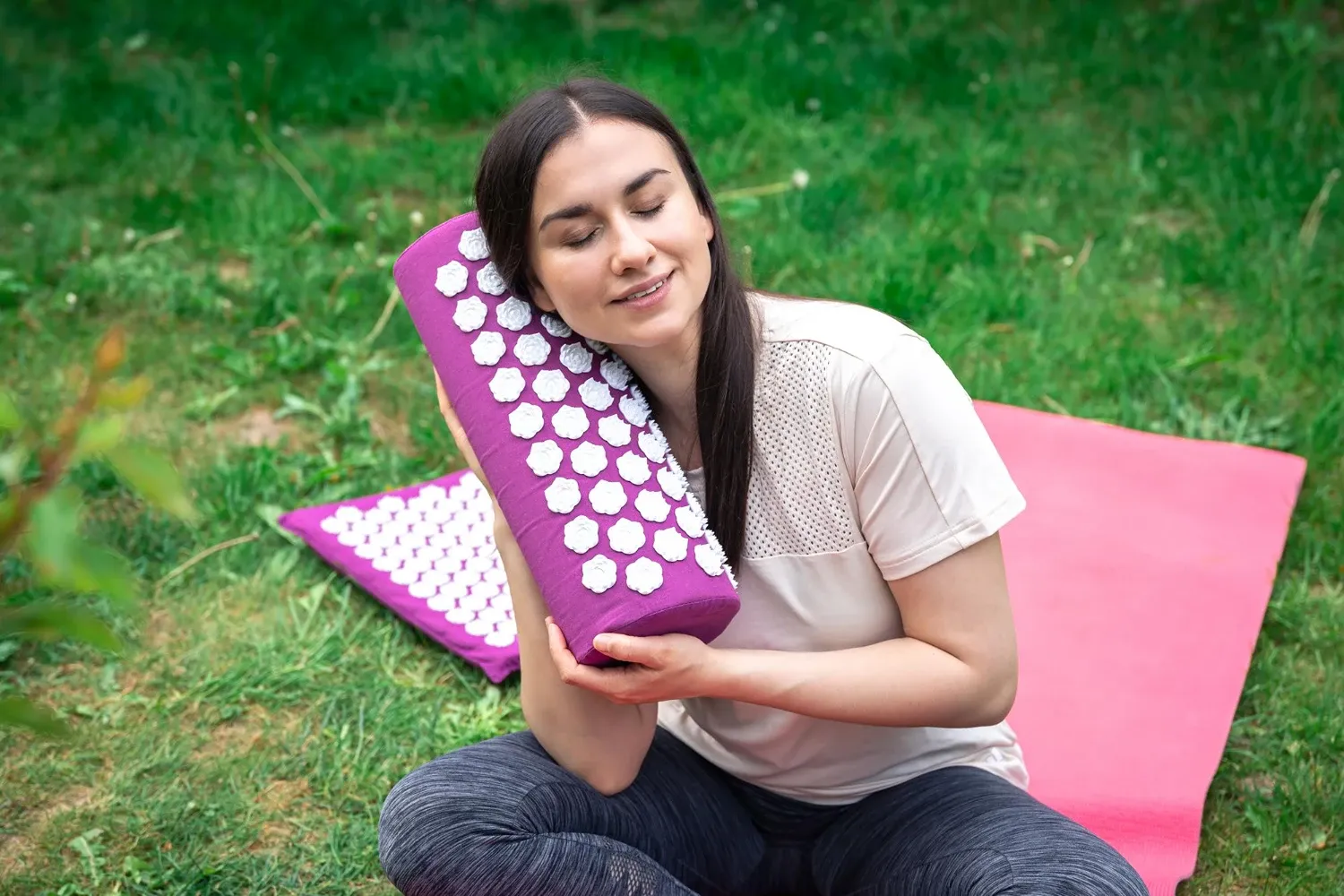
Acupressure mats are designed with hundreds or even thousands of small plastic points that apply gentle pressure to your skin and underlying tissues when you lie on them. They’re inspired by principles of acupressure that have been utilized for centuries and work by providing consistent sensory input to your nervous system.
When those pressure points make contact with your body, several things happen. Blood flow to the area increases, nerve endings are stimulated, and many people experience a relaxation response as their nervous system begins to settle.
It’s not magic—it’s physiology.
Research suggests acupressure may help support muscle relaxation, improve sleep quality, and provide modest pain-relieving effects for some individuals. While we’re still learning exactly how and for whom these interventions work best, many people find them to be a valuable addition to their recovery routines.
WAVE Insight: “One of the biggest misconceptions about recovery tools is that they have to completely solve a problem to be valuable. Sometimes helping your body relax, improving circulation, or creating space to slow down is incredibly worthwhile on its own.”
What Should You Expect?
If it’s your first time using an acupressure mat, don’t be surprised if your initial reaction is, “Why did I buy this?”
The sensation can feel surprisingly intense during the first few minutes. Many people describe it as sharp or uncomfortable initially before transitioning into a warming, tingling sensation as their body begins to adapt.
After three to five minutes, that intensity often gives way to relaxation.
With regular use, you may notice:
- Easier muscle relaxation, particularly through the neck and back
- Improved circulation to targeted areas
- Better sleep quality when used before bed
- A sense of calm or nervous system downregulation
- Temporary relief of muscle tension and soreness
For many people, those benefits alone make acupressure mats worthwhile.
What Acupressure Mats Don’t Do
At WAVE, we spend a lot of time talking about root-cause care—and that’s where context matters.
An acupressure mat can absolutely help you feel better but like most things, it’s not a magic bullet. What it also doesn’t do is determine why you’re experiencing pain or tension in the first place.
If you’re waking up with neck pain every morning because of your work setup, an acupressure mat may help relax those muscles at the end of the day. If you’re experiencing low back pain because you’re returning to exercise after years of inactivity, it may provide temporary relief while your body adapts to movement.
Those are valuable things.
But the mat itself isn’t changing movement patterns, improving strength deficits, or addressing underlying dysfunction.
Think of it the same way we think about stretching. Stretching feels good, can improve mobility, and absolutely has a place in recovery. It’s simply one piece of a much bigger picture.
WAVE Insight: “Recovery doesn’t have to be all-or-nothing. Sometimes symptom relief is appropriate and helpful—we simply don’t want symptom management to become the only strategy.”
Where Acupressure Mats Fit Into Recovery
This is where we think acupressure mats shine.
They’re not necessarily a replacement for other interventions—they’re a complement to them.
We love anything that helps people build sustainable recovery habits. Spending 10 or 20 minutes intentionally slowing down, focusing on your breathing, and giving your body an opportunity to relax is rarely time wasted.
An acupressure mat may fit beautifully alongside:
- Physical therapy
- Strength training programs
- Mobility work and stretching
- Stress management practices
- Recovery routines after exercise
- Sleep and wellness habits
For some people, using their mat becomes part of their nightly routine before bed. For others, it’s something they utilize after long days sitting at a desk or following challenging workouts.
The goal isn’t choosing between symptom relief and addressing the root cause—it’s recognizing that there’s often room for both.
A Few Safety Considerations
If you’re new to acupressure mats, start slowly.
Five to ten minutes is more than enough for your first few sessions. Your body and nervous system will gradually become accustomed to the sensation over time.
It’s also worth speaking with your healthcare provider before use if you have particularly sensitive skin, compromised circulation, severe osteoporosis, active infections, or other medical conditions that may make acupressure inappropriate.
More time isn’t necessarily better. Consistency tends to matter far more than intensity.
The Bottom Line
Acupressure mats can be a valuable recovery tool. They may help improve circulation, promote relaxation, support better sleep, and provide temporary relief from muscle tension and soreness.
That’s worth something.
At the same time, lasting recovery often requires understanding what’s contributing to discomfort in the first place. Sometimes that’s strength. Sometimes it’s movement patterns. Sometimes it’s stress, sleep, or simply doing too much too quickly.
The right answer isn’t always choosing one approach over another—it’s building a plan that’s appropriate for your body and your goals.
At WAVE, we don’t believe recovery has to fit neatly into one box. Sometimes it looks like strength training. Sometimes it looks like hands-on physical therapy. And sometimes it looks like spending ten quiet minutes on an acupressure mat before bed.
The important part is knowing which tools will move you forward—and when they’re most helpful.
About the Author
Dr. Sarah Crawford, PT, COMT, CMTPT, CPI, Founder
Dr. Sarah Crawford is the Founder of WAVE Physical Therapy & Pilates and Anchor Wellness Center. She specializes in treating chronic pain, neck and back pain, cervicogenic headaches, sports injuries, and temporomandibular joint dysfunction (TMJ). With advanced training in orthopedic manual therapy, trigger point dry needling, and Pilates-based rehabilitation, Dr. Crawford utilizes a whole-body, hands-on approach to help patients restore function, improve movement, and achieve long-term wellness. Her background in neurological rehabilitation and passion for root-cause care allow her to create individualized treatment plans that empower patients to move and feel their best.