


You’ve probably heard about PRP—the therapy that’s supposed to heal tendons, repair cartilage, and get you back to pain-free movement. But maybe you’ve also heard conflicting stories: it worked wonders for someone’s shoulder; it didn’t do anything for someone else. So what’s the truth? Does PRP actually work, or is it another expensive promise in a healthcare system full of them?
What PRP Actually Is (And Why It’s Not Magic)
Let’s start with what PRP really does, because the marketing often gets ahead of the science.
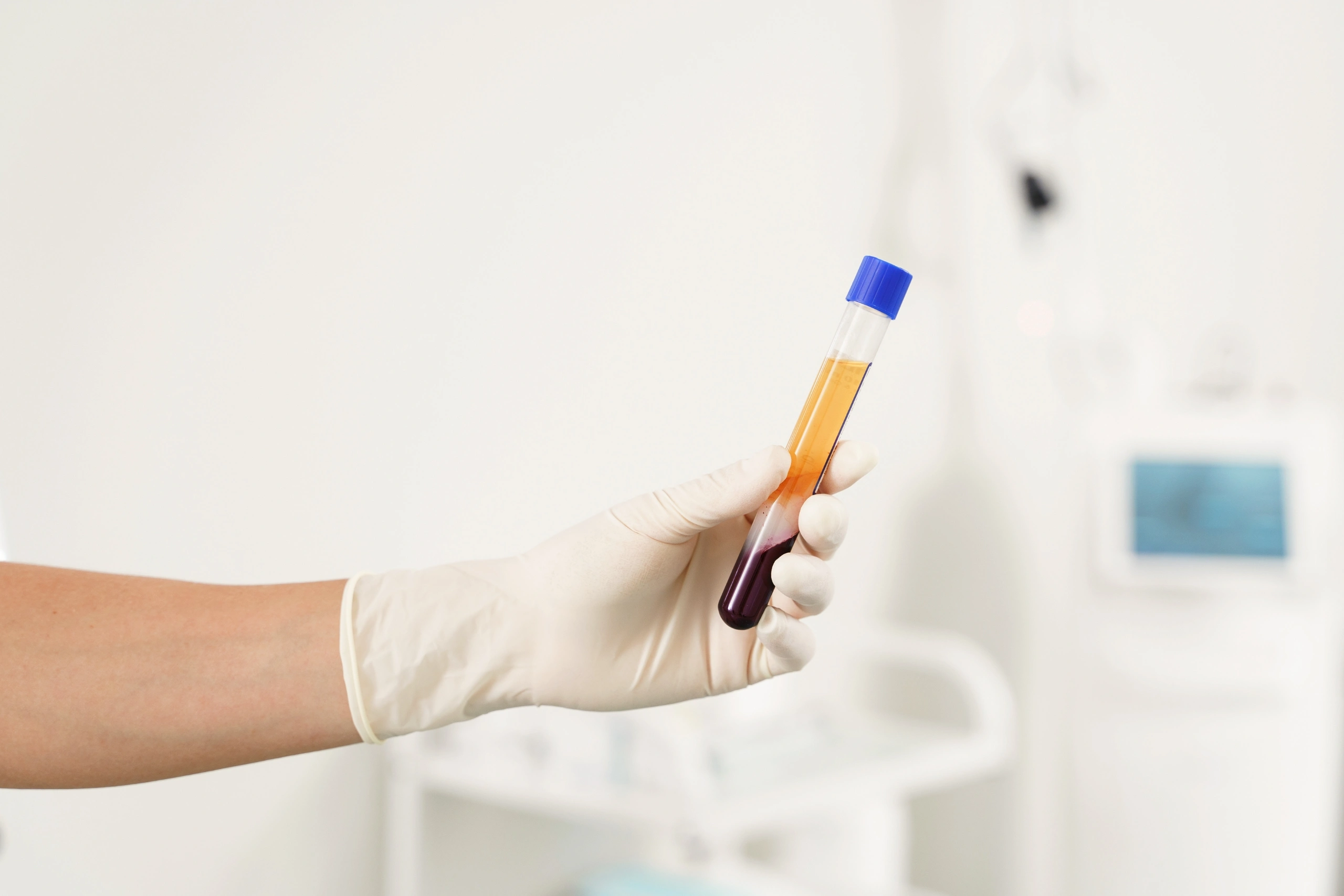
PRP stands for platelet-rich plasma. Here’s the simple version: a small amount of your blood is drawn, spun down to concentrate the platelets (cells that help with clotting and healing), and then injected back into an injured area—usually a tendon, joint, or ligament.
The idea is sound. Platelets contain growth factors that promote tissue repair and reduce inflammation. When you have a chronic tendon injury or ligament sprain that isn’t healing well on its own, introducing a concentrated dose of these growth factors theoretically gives your body a jumpstart.
But here’s where the hype diverges from reality: PRP works best in very specific situations. It’s not a cure-all for pain, and it’s certainly not a replacement for addressing the reason you got injured in the first place.
When Does PRP Actually Help? The Latest Research
The research on PRP is mixed—which is honest, and worth acknowledging. It works better for some conditions than others. Here’s what the evidence actually shows.
Knee Osteoarthritis: The Strongest Case
This is where PRP has the most consistent support. A comprehensive narrative review synthesizing 40 high-quality studies from 2013 to 2025 found that PRP injections—particularly leukocyte-poor PRP—demonstrate superior pain relief and functional improvement compared to hyaluronic acid and corticosteroids, especially in patients with mild to moderate osteoarthritis.
That’s not a small finding. Hyaluronic acid injections have been a standard of care for years. A 2025 meta-analysis found statistically significant differences in pain and total function scores at 12 months, with PRP showing superiority to hyaluronic acid in the treatment of knee OA.
The picture gets even more nuanced when you look at how PRP is prepared. A 2022 meta-analysis of 14 randomized controlled trials found that activated PRP was more effective in improving pain and functional scores than non-activated PRP in knee osteoarthritis patients. In other words, not all PRP is created equal—the formulation and preparation protocol matters.
Rotator Cuff: More Nuanced Than You Think
Rotator cuff disease is one of the most searched conditions when it comes to PRP, and the evidence here is more complicated. A systematic review published in 2025 covering approximately 2,000 patients found that PRP generally produced significant short-term pain relief, with lower pain scores at six weeks, three months, six months, and one year compared to controls—and often improved functional scores during the first three to six months.
However, the story changes significantly depending on tear type. For partial-thickness tears, a 2024 systematic review found that PRP treatment is effective in reducing pain in the short and long term, though its impact on functional recovery appears somewhat constrained and doesn’t endure over time.
For full-thickness or complete tears, the evidence is considerably weaker—and this is where we have to be straightforward with patients. The structural complexity of a complete tear limits what any injection can accomplish on its own.
Achilles Tendinopathy: Where PRP Disappoints
This is a humbling data point for PRP advocates—including those of us who use regenerative therapies in practice. An umbrella review of eight systematic reviews and meta-analyses published between 2018 and 2025 found no statistically significant differences between PRP and control interventions for pain reduction and functional improvement in Achilles tendinopathy, with only modest short-term improvements at three to twelve weeks that were neither clinically meaningful nor sustained at longer follow-up periods.
A 2024 meta-analysis echoed this conclusion: although PRP injection has gained increasing popularity, no solid evidence has been established for Achilles tendinopathy, with heterogeneity in pathology and PRP preparation methods cited as major factors limiting clear conclusions.
That doesn’t mean PRP is never appropriate for Achilles issues—but it does mean it should never be the first or only tool in the plan.
Lower Back Pain: The Weakest Evidence
The research here is limited and inconsistent. While some studies on lumbar disc herniation show promise when PRP is combined with surgical procedures, the evidence for PRP as a standalone injection for general low back pain remains thin. This is an area where we need much more rigorous research before making strong clinical recommendations.
Why PRP Alone Isn’t the Full Answer—And the Research Backs This Up
Here’s what we see repeatedly in clinical practice: people get excited about PRP because it feels like a solution. Someone injects your injury, and boom—you expect to be fixed.
But the research increasingly confirms what good clinicians already knew: PRP works best as part of a comprehensive plan, not as a standalone treatment.
A 2024 retrospective cohort study divided knee OA patients into three groups—PRP plus exercise, PRP alone, and exercise alone—and tracked outcomes for a full year. The combination group showed the highest response rates at every time point: 50% response at one and three months, and 65% at twelve months. PRP immediately relieved pain, while exercise conferred later but more enduring effects—and combining the two produced synergistic advantages that persisted for up to twelve months.
That last phrase is worth sitting with: synergistic advantages. It means one plus one equaled more than two.
A 2024 randomized controlled trial found that exercise alone was clinically superior to PRP alone when it came to function and physical outcomes in mild-to-moderate knee OA. Read that again: exercise alone outperformed PRP alone. PRP is a biological accelerator—but without the physical work of rebuilding capacity, it has a ceiling.
Your pain didn’t develop overnight from one unlucky moment. Usually, it developed over months or years of:
- Movement patterns that overload certain tissues
- Weakness or imbalances in surrounding muscles
- Poor posture, breathing, or stability habits
- Load management that didn’t match your capacity
An injection—even a well-placed one with growth factors—cannot fix those underlying patterns.
This is why we approach regenerative therapies (PRP, SoftWAVE, and others) differently than many clinics do. We don’t see them as standalone treatments. They’re tools that work within a comprehensive plan that includes:
- Understanding the root cause. Why did this tendon break down? Was it weakness? Poor movement mechanics? Overuse? Until you know, you’re treating a symptom, not solving the problem.
- Rebuilding capacity through movement. After PRP, you need thoughtful, progressive physical therapy to retrain the tissue and surrounding muscles. This is non-negotiable.
- Changing the patterns that created the injury. If you return to the same movement habits, posture, or load without addressing them, the injury often returns.
What “Mixed Evidence” Actually Means for You
When researchers say PRP evidence is “mixed,” that language can feel dismissive—like it barely works at all. That’s not quite right, and it’s worth unpacking.
“Mixed” largely means that we don’t yet have fully standardized protocols. Heterogeneity in PRP formulations—including platelet and leukocyte content and activation protocols—injection regimens, and follow-up durations limits direct comparability across studies. In plain terms: two studies can both call their treatment “PRP” while using very different products, delivered differently, to patients at different stages of disease. Of course the results vary.
A global bibliometric analysis of PRP sports injury research from 2000–2024 found that the question of efficacy has been the single hottest research topic over the past five years, with a burst strength of 13.4 between 2020 and 2024—the highest value in the entire field over that period. The scientific community is actively working to answer the questions that remain.
What this means practically: the right PRP, prepared correctly, delivered by someone who knows where and how to inject it, and paired with targeted rehabilitation, looks quite different from a rushed injection at a cash-pay wellness clinic. The tool is only as good as the hands using it and the plan supporting it.
The Real Question to Ask
Rather than “Does PRP work?”—which is too simplistic—the better question is: “Is PRP the right tool for my specific injury, combined with a plan that addresses why I got hurt in the first place?”
PRP may absolutely be part of your solution. But it’s most effective when it’s one piece of a bigger picture: proper diagnosis, movement retraining, and sustainable habit change.
Key Takeaways
- PRP shows its strongest evidence in knee osteoarthritis, where multiple meta-analyses now show it outperforms hyaluronic acid and corticosteroid injections—especially for mild to moderate disease.
- For rotator cuff and tendinopathy, the evidence is more condition-specific: partial tears show short-term promise; Achilles tendinopathy studies are largely disappointing.
- PRP plus rehabilitation consistently outperforms PRP alone—research shows synergistic effects when the two are combined, with longer-lasting results.
- Formulation matters. Not all PRP is the same—preparation protocol, leukocyte content, and activation status all affect outcomes.
- The real healing comes from understanding and changing the patterns that created the injury.
- You deserve a healthcare provider who explains the “why” and creates a complete plan, not just an injection and hope.
If you’re considering PRP—or if an injury has you stuck in a cycle of temporary fixes—let’s talk. We’ll help you understand what’s actually happening in your body and whether PRP is the right tool for you.
Schedule an Initial Evaluation with us to discuss your injury and create a real plan for lasting recovery.
About the Author:
Dr. Sarah Cash Crawford, PT, DPT, COMT, CMTPT
Dr. Sarah Cash Crawford, PT, DPT, COMT, CMTPT earned a Doctorate of Physical Therapy from the University of Miami (FL) in 2011 and a Bachelor of Arts in Sociology from The Ohio State University in 2008. She is an active member of the American Physical Therapy Association (APTA) as well as the Ohio Physical Therapy Association (OPTA).
Dr. Crawford is highly skilled in treating a wide variety of conditions including chronic pain, neck and back pain, cervicogenic headaches, sports injuries and temporomandibular joint dysfunction (TMD). She is classically trained in Geoffrey Maitland’s approach to orthopedic physical therapy and is a Certified Orthopedic Manual Therapist (COMT). She believes in the use of hands on treatments to restore normal function in order to maximize results and optimize patients’ outcomes. Dr. Crawford was the first Physical Therapist certified by Myopain Seminars (R) in the state of Ohio in Trigger Point Dry Needling (CMTPT) as an alternative treatment intervention to a variety of conditions including: tennis elbow, neck/upper back pain, IT Band Syndrome, Frozen Shoulder, Rotator Cuff injuries and much more. Dr. Crawford believes in the power of functional training through the use of multiple treatment techniques however she places an emphasis on Pilates-based rehabilitation, earning her Certified Pilates Instructor credentials in December 2012.
Dr. Crawford began her career with extensive training in neurological rehabilitation, specifically spinal cord injury and cerebrovascular accident (stroke), which has further enhanced her skills as an orthopedic therapist. She utilizes a comprehensive approach to each and every patient, integrating neuromuscular, fascial, and musculoskeletal systems in a manner that positively influences a faster return to prior level of function.