


Running is often seen as a forward-driven activity—one foot in front of the other, building endurance mile after mile. But if you’ve ever dealt with nagging hip pain, pelvic instability, or a sense that your stride just feels “off,” you’ve likely experienced the consequences of neglecting strength outside that forward (sagittal) plane.
This becomes even more important in the postpartum season, when the body is recalibrating after pregnancy and birth. The demands of motherhood—lifting, carrying, feeding, and often doing it all with limited sleep—layer additional stress onto a system that’s already adapting.
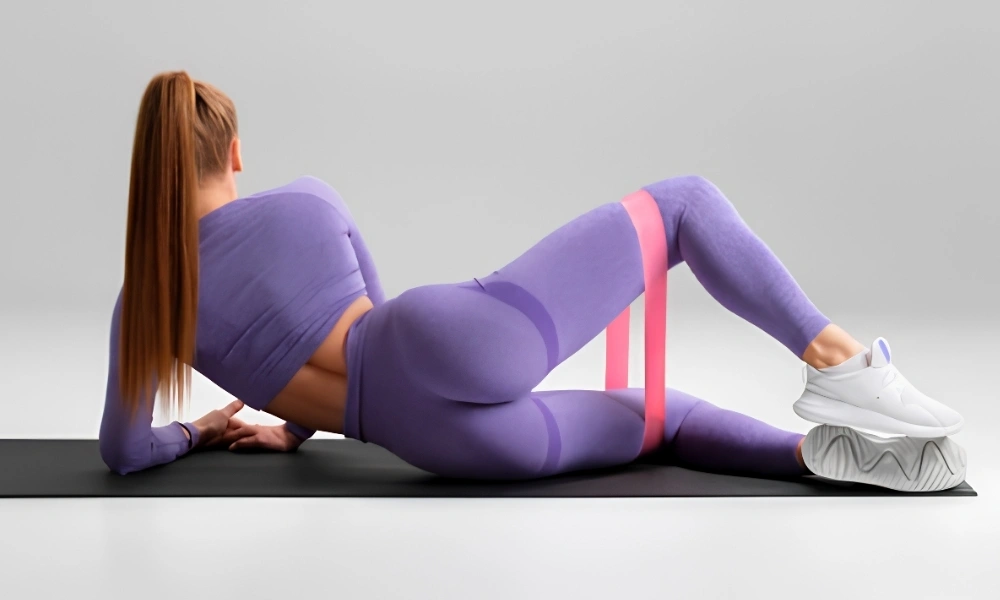
Let’s talk about one simple, powerful exercise that can make a meaningful difference: the modified side plank with a clam shell. My colleague, Dr. Jackie Sanders, PT, DPT had the opportunity to discuss this exact thing with Outside Magazine, so be sure to take a look at that article as well.
Why Strength Training Matters More Postpartum
After pregnancy, the body doesn’t just “bounce back”—it reorganizes. The core and pelvic floor have been lengthened and loaded in new ways. Hormonal changes can impact joint stability. And movement patterns often shift to accommodate a growing baby (and later, carrying one).
For runners, this can show up as:
- Decreased pelvic stability
- Hip weakness or asymmetry
- Loss of efficient force transfer
- Increased risk of injury
Strength training—especially targeted, intentional work—helps restore balance, improve efficiency, and support a sustainable return to running.
The Problem with Forward-Only Training
Most runners naturally gravitate toward exercises that mimic running: squats, lunges, deadlifts. These are great—but they primarily live in the sagittal plane (forward and backward movement).
Here’s the catch:
- Running may look linear, but your body is constantly working in all three planes of motion:
- Frontal plane (side-to-side stability)
- Transverse plane (rotational control)
If you don’t train these systems, your body will compensate—and that’s where inefficiency and injury creep in.
The Go-To Exercise: Modified Side Plank + Clam Shell
This is a daily (or near-daily) staple for a reason. It’s simple, low-impact, and incredibly effective.
What it does:
- Activates the deep core (including obliques)
- Strengthens the hip stabilizers (especially glute med)
- Trains control in the frontal and transverse planes
- Improves force transfer and running efficiency
- Encourages intentional breathing—critical postpartum
Why it works:
Instead of creating movement, this exercise teaches your body to control movement. That’s exactly what runners need—especially postpartum runners whose systems are relearning stability.
Why Do It (Almost) Every Day?
This isn’t about intensity—it’s about consistency and awareness.
- Using this as a warm-up:
- Prepares your body before a run
- Reinforces proper muscle activation
- Helps identify asymmetries early
- Creates a moment to reconnect with your breath and core
It’s also gentle enough to support recovery without adding fatigue.
Key Form Cues (This Is Where the Magic Happens)
Form matters more than progression. Here’s what to focus on:
- Stack your torso: Avoid rolling forward or backward
- Breathe fully: Expand your ribs in all directions—not just the top side
- Don’t collapse into the bottom side: Maintain lift through the underside of your body
- Balance the effort: The lift should come equally from your obliques and bottom hip
- Stay lifted: There should be a continuous sense of support from the bottom hip
- Remember: The clam shell movement is secondary—the stability is primary
How to Modify (and Progress)
If this feels challenging—you’re in the right place. Start where your body is.
Beginner:
- Side-lying position, knees bent
- Focus on holding alignment and breathing
- No leg movement yet
Intermediate:
- Modified side plank (knees down)
- Add the clam shell motion
Advanced:
- Full side plank
- Add controlled clam shell movement
The goal isn’t to rush—it’s to own each level with control and quality.
The Bigger Picture
For postpartum runners, strength training isn’t just about getting stronger—it’s about restoring connection, control, and confidence in your body.
The modified side plank with clam shell checks all those boxes:
- It’s accessible
- It’s targeted
- It builds the kind of strength that actually translates to better running
And perhaps most importantly—it meets your body where it is, while helping guide it forward.
As always, please reach out if we can help you more specifically!
About the Author:
Dr. Lisa Kelly, PT, DPT, CAPP-Pelvic
Dr. Kelly is a Doctor of Physical Therapy whose experiences and treatment approach set her apart. She has worked extensively with individuals who have experienced trauma and values the importance of building trust and meeting patients where they are in their healing journey. Her mission is to continually learn and grow to help others achieve their goals and improve their quality of life. She is passionate about advancing pelvic health, including better pregnancy and postpartum rehabilitation, education on menopause, awareness of pelvic pain resources, and access to the benefits of pre-habilitation for prostate cancer.