


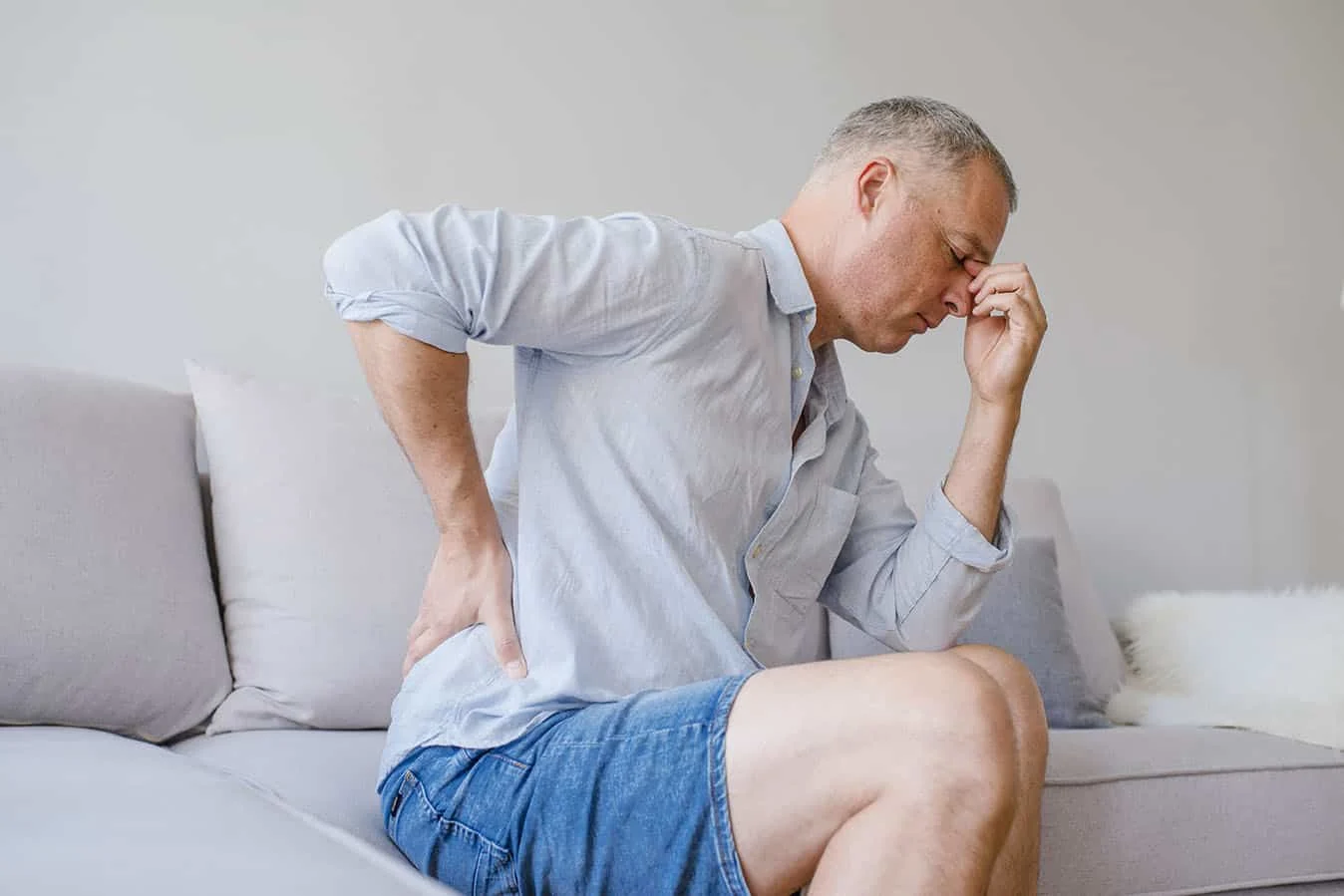
You wake up with back pain after a normal night of sleep. Or your knee flares up halfway through a busy week—even though you didn’t twist it, fall, or change your workout. Maybe you finally got imaging done, expecting answers, only to hear: “Everything looks normal.”
If that’s ever happened to you, you’re not alone. And more importantly—you’re not broken.
One of the most misunderstood truths about the human body is this: you can be in real pain even when there is no structural damage. Understanding why can be the difference between feeling stuck and starting to feel better.
The Problem: Pain Feels Like Proof Something Is Wrong
Pain is convincing. It demands attention. And most of us have been taught—directly or indirectly—that pain means injury, wear-and-tear, or damage that needs to be fixed.
So when pain shows up without a clear cause, it’s unsettling. People often respond by:
- Avoiding movement out of fear
- Bracing or guarding their body
- Assuming they’re making things worse
Ironically, these protective strategies often increase pain over time.
The Truth: Pain Is a Protective Signal, Not a Damage Report
Pain does not come directly from your tissues—it comes from your nervous system.
Think of your nervous system like a home security system. Its job is to keep you safe by detecting potential threats. When the system works well, it alerts you appropriately. But when it becomes overly sensitive, it can start sounding the alarm even when there’s no real danger—like a smoke detector going off because someone burned toast.
This heightened sensitivity is often referred to as pain sensitization. When this happens:
- Pain can exist without new tissue damage
- Imaging (X-rays, MRIs) may look normal
- Stress, fatigue, poor sleep, or emotional load can significantly increase pain
The pain is real—but it’s coming from a system that’s trying too hard to protect you.
Why Pain Can Flare Up “Out of Nowhere”
If pain isn’t always about damage, why does it suddenly spike?
Several very normal physiological factors can temporarily turn the volume up on pain signals:
Several very normal physiological factors can temporarily turn the volume up on pain signals:
- Stress: Increases nervous system reactivity and muscle tension
- Changes in activity: Doing more or less than usual can irritate sensitive tissues
- Poor sleep: Reduces your body’s ability to regulate pain
- Prolonged positions: Sitting, standing, or traveling for long periods
- Nutrition & fueling: Inconsistent meals, inadequate protein, dehydration, or highly inflammatory eating patterns can increase systemic inflammation and make the nervous system more reactive
- Sensory overload: Busy environments, noise, and mental fatigue can overwhelm an already sensitive system
Notice the pattern—these factors affect your system, not just a single body part.
The Solution: Calm the System, Support the Body
At WAVE Physical Therapy + Pilates, we approach pain through a root-cause, whole-person lens. When pain doesn’t equal damage, the goal isn’t to “fix” a broken part—it’s to help your nervous system feel safe again.
That includes:
✔ Thoughtful Movement
Gentle, progressive movement teaches your nervous system that motion is safe, reducing fear and sensitivity while restoring strength and mobility.
✔ Nervous System Regulation
Breathing strategies, pacing, and somatic-based exercises help settle an overactive system and reduce pain amplification.
✔ Recovery Fundamentals
Sleep, hydration, nutrition, and stress management aren’t “extras”—they directly influence how much pain you feel.
✔ Education
Understanding why you’re in pain reduces fear, prevents overprotection, and empowers you to move with confidence again.
What About Common Self-Care Practices?
When people are in pain—even pain without clear tissue damage—they often reach for quick solutions. Some of these can help, especially when used thoughtfully. But it’s valuable to understand why they may provide relief and what they’re actually doing for your body.
Over-the-Counter Pain Medications
OTC meds like ibuprofen or acetaminophen can reduce pain temporarily by lowering inflammation or dampening the pain signal. For short-term flare-ups, this can make movement more comfortable. However, these medicines don’t address the underlying nervous system sensitivity that often drives chronic or non-specific pain. They’re best used occasionally—not as your only strategy.
Foam Rolling
Foam rolling and similar tools apply sustained pressure to muscles and fascia, which can:
- increase blood flow,
- temporarily reduce muscle tension, and
- give your nervous system a sense of calming input.
For many people, a few minutes with a foam roller feels good and helps with stiffness. But similar to OTC meds, foam rolling usually only modulates symptoms for a short period—it doesn’t “fix” sensitivity or chronic nervous system reactivity on its own.
Stretching
Gentle stretching can improve your sense of ease and movement quality by:
- improving flexibility and range of motion,
- providing light sensory input that can calm the nervous system, and
- helping you reconnect with how your body moves.
It’s most effective when integrated into a broader movement routine, rather than used in isolation as a quick fix.
Massage Guns and Percussive Tools
In recent years, massage guns have become one of the most talked-about self-care tools for muscle pain and tightness. You may have seen them everywhere from gyms to physical therapy offices—and we were recently interviewed for a feature in Women’s Health magazine about the best massage guns currently on the market. In that article, editors highlighted devices that help soothe sore muscles and improve recovery as part of a broader care routine.
But how do they really work?
Massage guns use percussive or vibration therapy—rapid pulses of pressure into soft tissues—to:
- increase blood flow to the area,
- help calm muscle tension,
- provide comforting sensory input that can down-regulate the nervous system, and
- improve the feeling of tightness or soreness.
Many people enjoy them because they’re convenient and custom-targeted. When used correctly, they can be a useful tool in a recovery or movement program, especially after workouts or to ease stiffness from prolonged sitting.
That said, it’s important to frame these tools accurately:
- They don’t “fix” chronic pain or heal tissue damage.
- Their benefits are usually temporary—like a calming signal to your nervous system.
- They’re most effective when paired with movement, education, and other recovery habits—not used as a stand-alone solution.
Putting It All Together
None of these self-care practices are inherently bad—they can all play a role in managing discomfort. But when pain isn’t about damage in the first place, relying on any single tool or trick isn’t usually enough.
Think of tools like OTC meds, foam rolling, stretching, and massage guns as supportive sensations. They help manage the experience of pain and give your nervous system reassuring input—but they don’t erase the deeper sensitivity patterns driving ongoing pain.
That’s why at WAVE, we encourage a multi-layered approach:
- using tools that feel good,
- engaging in movement that builds confidence,
- optimizing lifestyle factors like sleep, stress, and nutrition (more on that above),
- and learning how pain actually works.
Together, these strategies help your system learn that you’re safe—not in danger—so pain becomes less frequent, less intense, and less frightening over time.
The Takeaway
Pain is not a verdict—it’s information.
Flare-ups don’t automatically mean injury, degeneration, or damage. Often, they’re a sign that your system is under load and asking for support, not shutdown.
Your body is adaptable. Your nervous system can learn safety again. And with the right approach, pain can become something you understand and manage—not something that controls you.
About the Author
Dr. Sarah Crawford is a physical therapist and founder of WAVE Physical Therapy + Pilates in Cincinnati. She specializes in root-cause orthopedic care, nervous-system–informed rehabilitation, and helping people move confidently without fear of pain or damage.