


By Annalise Calo, PT, DPT
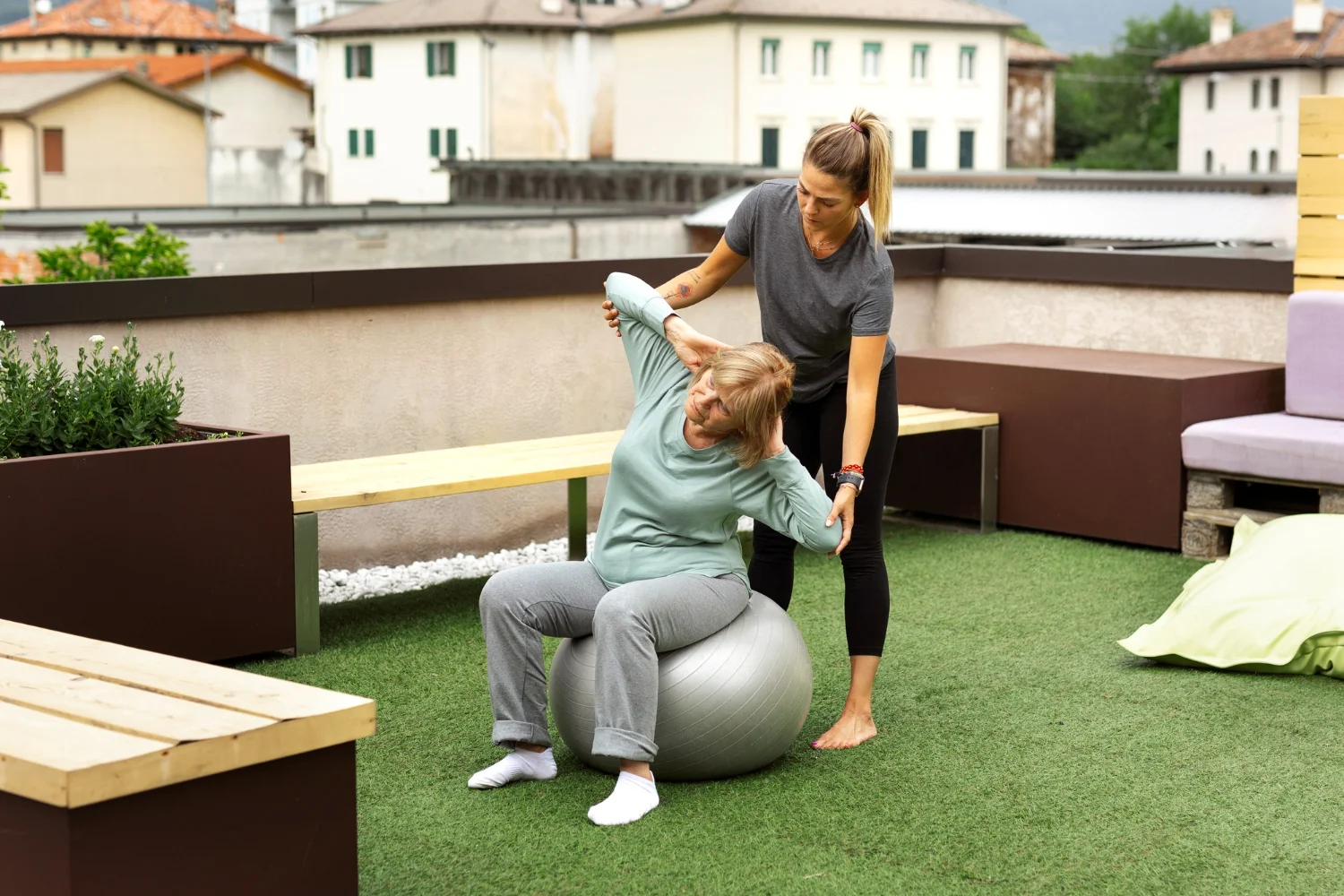
Have you noticed yourself feeling less confident walking on uneven surfaces? Maybe you hesitate before stepping off a curb, hold the railing more often on stairs, or feel a little unsteady getting out of bed.
You’re not alone.
Many people assume balance changes are simply a normal part of aging — something that inevitably happens and can’t be improved. But that’s not the full story, and it’s the exact misconception I get asked about most.
Balance is not something you either “have” or “lose.” It’s a skill your body continues to adapt to throughout your life. Just like strength, flexibility, and endurance, balance can improve when it’s trained intentionally — and reaction time, the piece most people never think to train at all, may matter just as much as the balance itself.
At WAVE, we believe the key to improving balance isn’t simply practicing more balance exercises. It’s understanding why your balance feels different in the first place, and addressing the systems that influence stability, confidence, and movement together.
I recently talked through exactly this with HuffPost for their piece, “Experts Say How This Disc Can Help Improve Balance,” which looks at balance discs and posture aids and — more importantly — what those tools can and can’t actually do for stability. It’s a good companion read to what’s below, because the short version of my answer there is the same one I’ll walk through here: the tool is never the whole plan.
What Actually Causes Balance Changes?
Balance is much more complex than simply standing on one foot.
Your body relies on three major systems working together:
- Your vestibular system (inner ear): helps your brain understand movement and changes in position.
- Your vision: provides information about your surroundings and helps guide movement.
- Your proprioception: your body’s ability to sense where it is in space without needing to look.
But there’s another factor that often gets overlooked entirely: your muscles need to respond quickly enough to protect you.
Imagine stepping off a curb and unexpectedly losing your footing. Your body has only milliseconds to recognize what’s happening, send a signal from the brain, and activate the right muscles to help you recover. That response depends on strength, coordination, and reaction time — three things working in sequence, fast enough that you never consciously notice them until they’re slower than they used to be.
As we age, changes in muscle mass, activity levels, and communication between the brain and muscles can affect how quickly your body responds. The good news: these systems are trainable, reaction time included.
Why Balance Training Is More Than Standing on One Foot
One of the biggest misconceptions about balance training is that it simply means standing still or repeating a single exercise. While activities like yoga, standing on one leg, or using balance tools can have value, they’re only one piece of the puzzle.
Effective balance training is purposeful and progressive. It challenges your body’s ability to:
- React quickly when your environment changes.
- Control movement through different positions.
- Build strength in the muscles responsible for stability.
- Improve awareness of where your body is in space.
A well-designed balance program may include:
- Single-leg balance progressions.
- Strength training for the hips, legs, and core.
- Controlled movements on different surfaces.
- Stepping and weight-shifting exercises.
- Coordination and reaction-based challenges.
The goal is not to make you feel unstable. The goal is to safely challenge your body so it learns how to become more stable — and faster to correct itself when something unexpected happens.
Are Balance Tools Helpful, or Just a Trend?
Balance discs, wobble boards, and other stability tools have become increasingly popular — it’s the exact question HuffPost asked me to weigh in on. So, do they work?
They can. Unstable surfaces challenge your proprioceptive system and require your body to make small, constant adjustments to maintain control.
However, the tool itself is not the solution. A balance disc sitting in your closet will not improve your balance. The difference comes from how the tool is used, and whether it’s part of a structured, progressive plan. Think of balance tools like any other piece of equipment — they’re simply a resource.
The right question isn’t, “Should I buy a balance tool?” The better question is, “How can I train the systems that are actually affecting my balance?”
The Root-Cause Approach: Why Personalized Training Matters
At WAVE, we don’t believe in giving everyone the same exercises, because balance challenges are different for every person.
When someone comes in concerned about their balance, we look deeper:
- Is there weakness in the hips, legs, or core?
- Has mobility changed in the ankles or hips?
- Has pain caused someone to avoid certain movements?
- Has coordination or reaction time decreased?
- Has confidence changed because certain activities feel unsafe?
Understanding the reason behind balance changes allows us to build a more effective plan. That may include:
- Targeted strengthening exercises.
- Mobility work to improve movement patterns.
- Proprioceptive training to improve body awareness.
- Functional movement practice.
- Progressive challenges to rebuild confidence.
Balance improvement isn’t about forcing your body to do something it can’t do. It’s about teaching your body how to move better — and how to react faster when it needs to.
The Bottom Line
Balance changes are common, but they are not something you simply have to accept. Your balance system can adapt at any age when you provide the right type of training.
Balance tools — including the kind I discussed with HuffPost — can be a helpful part of that training, but they’re only one part of the solution. The most important step is understanding what’s actually contributing to your balance challenges and addressing the root cause, reaction time included.
At WAVE, our physical therapists take the time to evaluate how your body moves so we can create an individualized plan focused on improving strength, coordination, confidence, and long-term function.
Because better balance is about more than preventing falls. It’s about helping you continue doing the things you love, with confidence.
About the Author
Annalise Calo, PT, DPT
Annalise Calo is a physical therapist at WAVE Physical Therapy & Pilates who is passionate about helping patients understand the connection between movement, strength, and long-term health. She takes a root-cause approach to rehabilitation, helping patients build confidence through individualized treatment plans, education, and purposeful movement.