


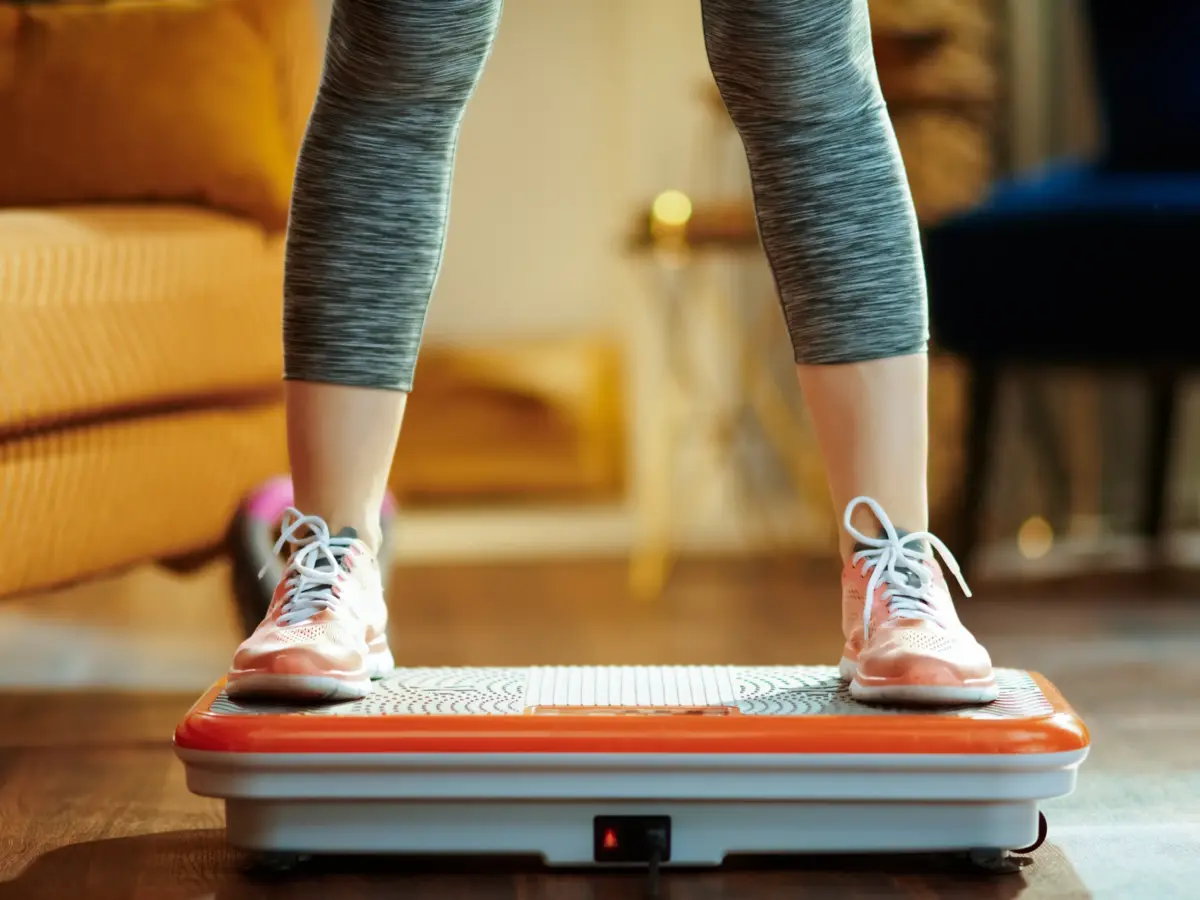
In a recent feature in SELF Magazine’s article on vibration plates and back pain, where I shared clinical insights on when this tool can be helpful—and when it’s not the right approach. Let’s explore what the research shows, who it might help, and how to use vibration safely and effectively—without falling for the hype.
What Vibration Plates Actually Do
Vibration plates create rapid, tiny oscillations that travel through your body when you stand, sit, or exercise on them. These subtle movements trigger micro-contractions in your muscles—particularly throughout your core and the small stabilizers along your spine. Over time, this repeated muscle engagement can improve circulation, wake up dormant stabilizers, and even build functional strength.
Think of it this way: your body is constantly making tiny adjustments to stay upright on the vibrating surface. It’s almost like doing hundreds of mini balance exercises in just a few minutes. Research suggests this can reduce muscle stiffness, improve posture, and help retrain the stabilizing muscles that support your spine.
At WAVE Physical Therapy + Pilates, we view vibration plates as a tool—not a cure-all. They aren’t a replacement for proper movement and strength training, but they can “wake up” your deep stabilizing system in a low-impact, accessible way. When used correctly, they help your body move and adapt more efficiently.
Who Benefits Most From Vibration Therapy
Vibration plates tend to work best for people dealing with chronic, non-specific low back pain—the kind that shows up as lingering stiffness, tightness, or general discomfort rather than sharp, shooting pain or recent injury.
Studies show that short, gentle sessions can improve both pain levels and function in these cases. Because the muscles around your spine and pelvis must continually adjust to the vibrations, they learn to stabilize in small, repeated ways. Over time, this can translate into better movement control and less pain during everyday activities.
However, vibration plates aren’t appropriate for everyone. You should avoid them if you have:
- Acute injuries or recent trauma
- Disc herniations with nerve symptoms
- Spinal fractures or significant instability
- Osteoporosis
- Recent spinal surgery
In these situations, vibration could actually worsen symptoms or interfere with healing. If you’re unsure whether vibration therapy is safe for you, check with a physical therapist first.
How Vibration Helps (and Its Limitations)
When used therapeutically, gentle vibration can:
- Increase blood flow to stiff or tight muscles
- Enhance activation of deep core and lumbar stabilizers
- Reduce muscle soreness through mild neuromuscular stimulation
- Improve posture and balance by enhancing body awareness
Here’s the catch: not all vibration is created equal. Prolonged or high-intensity vibration—like what construction workers or truck drivers experience—can actually contribute to back pain over time. That’s why understanding the right dose matters. A few minutes of gentle, controlled vibration is helpful. Hours of aggressive shaking is harmful.
The key difference? Intention and intensity. Therapeutic vibration is brief, controlled, and paired with good body mechanics. Occupational vibration exposure is prolonged, uncontrolled, and often combined with poor posture.
How to Use a Vibration Plate Safely
If you’re curious about trying a vibration plate for back pain, here are some clinician-approved guidelines:
Start low and slow. Begin with short sessions—just 1 to 2 minutes—at a low intensity setting. See how your body responds before increasing duration or frequency.
Engage your core. Stand with your knees slightly bent and your core gently engaged. This helps protect your spine and prevents excess strain on your joints.
Less is more. Don’t crank up the intensity or stand on the plate for 20 minutes. Overdoing it can irritate muscles and joints rather than help them.
Use it as a supplement, not a solution. Vibration therapy works best when combined with targeted strength work, mobility exercises, and movement retraining. It’s one tool in the toolbox—not the whole plan.
Get assessed first. Especially if you’ve had recent surgery, disc issues, nerve symptoms, or balance problems. A quick evaluation can save you from making things worse.
Real progress comes from addressing the root cause of your pain—not just managing symptoms. Vibration plates can support your recovery, but they shouldn’t be your entire strategy.
When to Seek Professional Guidance
If your back pain is sharp, new, radiating down your leg, or tied to a recent injury, a vibration plate isn’t the place to start. These situations need a deeper evaluation to rule out nerve involvement, structural damage, or other underlying issues.
At WAVE Physical Therapy + Pilates here in Cincinnati, we assess your full movement patterns to understand why your back hurts—and design a plan that builds long-term stability and confidence. Vibration therapy might be one tool we incorporate, but it’s always part of a bigger, personalized strategy that addresses posture, strength, mobility, and movement quality.
We’re not interested in quick fixes. We’re interested in helping you move better, feel stronger, and get back to the activities you love—without fear or limitation.
The Bottom Line
Vibration plates aren’t a magic cure, but they can be a useful part of a thoughtful back care approach for the right person. Used correctly, they help your muscles “wake up,” your posture improve, and your body feel more capable.
But here’s the truth: no amount of vibration will fix poor movement patterns, weak stabilizers, or postural habits that load your spine unevenly. If you want lasting relief, you need to address the why behind your pain—not just the symptoms.
Ready to get to the root of your back pain? Schedule an evaluation with our team at WAVE Physical Therapy + Pilates and let’s figure out what your body actually needs—vibration plate or not.
👉 Want to learn more? Check out my feature in SELF Magazine: Can a Vibration Plate Help With Back Pain?
References:
- Rittweger, J. (2010). Vibration as an exercise modality. Journal of Musculoskeletal & Neuronal Interactions.
- Cardinale, M., & Bosco, C. (2003). The use of vibration as an exercise intervention. Exercise and Sport Sciences Reviews.
- del Pozo-Cruz, B., et al. (2011). Effects of whole body vibration therapy on main outcome measures for chronic non-specific low back pain. Journal of Rehabilitation Medicine.
- Sitjà-Rabert, M., et al. (2012). Whole body vibration training for patients with neurodegenerative disease. Cochrane Database of Systematic Reviews.
- Gómez-Trullén, E. M., et al. (2020). Acute effects of whole-body vibration on intensity-related cardiovascular responses. Dose-Response.
- Wang, X. Q., et al. (2019). Whole body vibration exercise for chronic low back pain. Medicine.
- Wahlström, J., et al. (2018). Whole-body vibration exposure and health effects. International Archives of Occupational and Environmental Health.
- Lupowitz, C., et al. (2022). Risks associated with whole body vibration therapy. Journal of Orthopaedic Research.
Zafar, H., et al. (2024). Whole body vibration and postural control. Frontiers in Human Neuroscience.