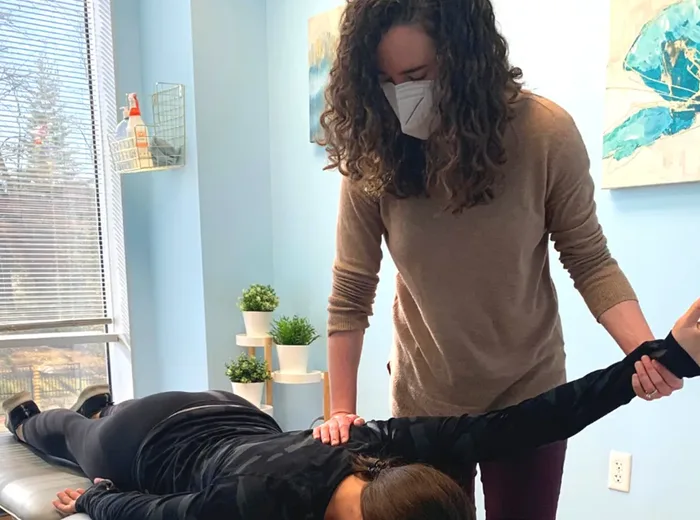
Numbness and tingling running down your arm is not something to just live with. Thoracic outlet syndrome responds well to the right combination of posture correction and mobility work.
Thoracic outlet syndrome develops when the nerves or blood vessels running between your collarbone and first rib get compressed in that narrow passage. The result can be pain, numbness, tingling, or weakness anywhere from the neck down through the fingers, and the exact symptoms depend on whether nerves, blood vessels, or both are involved.

Some people are born with an extra rib or a tighter-than-usual muscular structure around the thoracic outlet, narrowing the space these structures need. This is a contributing factor rather than something we can change, so treatment focuses on maximizing the space that is available.
Rounded shoulders and a forward head position narrow the thoracic outlet further and are one of the most common contributors we see. Posture correction is often the single most effective piece of treatment.
Sports, jobs, and even sleeping positions that involve repeated overhead arm use can irritate the structures in this space over time. A car accident or other trauma can also trigger symptoms suddenly.
Tight scalene and pectoral muscles are common contributors to nerve and vessel compression at the thoracic outlet. Manual therapy and myofascial release directly address this tightness.
Hours spent hunched over a desk or phone gradually reinforce the postural pattern that narrows the thoracic outlet. Small, consistent posture changes throughout the day make a measurable difference.
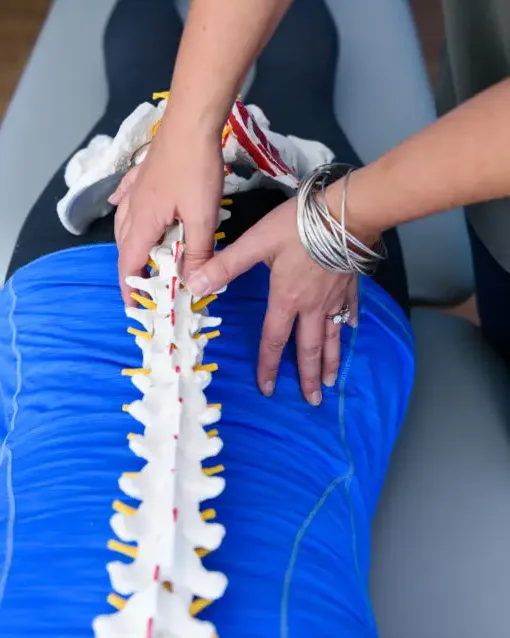
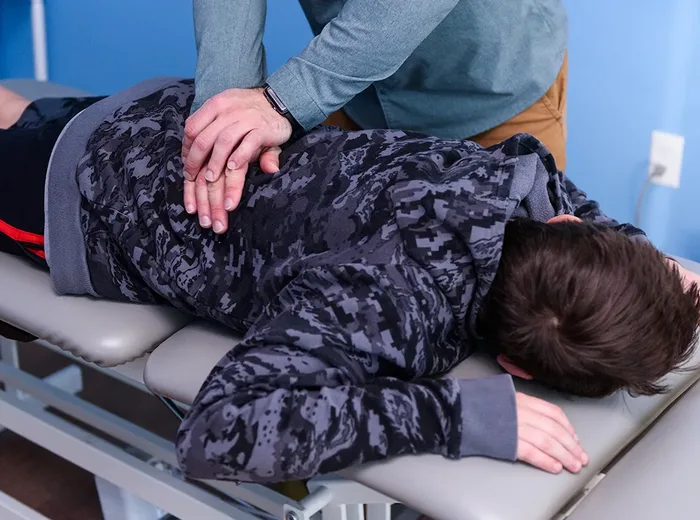
Thoracic outlet syndrome responds well to conservative treatment in the majority of cases, which is good news since surgery is typically reserved for severe or unresponsive cases. We start with a thorough evaluation to identify whether nerves, blood vessels, or both are involved, and to understand your specific postural and movement contributors. Treatment combines manual therapy and myofascial release to reduce tightness in the neck and chest muscles compressing the thoracic outlet, targeted stretching and strengthening to correct posture, and education on positions and habits to avoid while healing. Because posture is such a central driver of this condition, the exercises and habit changes you do outside of sessions matter just as much as the hands-on treatment itself.
We manage thoracic outlet syndrome with the same Pain, Prime, Perform, Prevent framework used across the practice: calm the compression and referred pain first, prime the neck, chest, and shoulder tissue with targeted mobility work, help you perform the desk work, sport, or daily tasks that symptoms had interrupted, and build the postural strength that prevents the narrow space from closing back down. Serving Cincinnati's desk workers, athletes, and everyone in between, we know this condition is frequently missed or misdiagnosed elsewhere, and a thorough one-on-one evaluation is often the turning point patients have been waiting for.
We identify the specific structures involved and begin manual therapy to reduce compression and ease symptoms.
We address the muscle tightness and postural habits narrowing the thoracic outlet, restoring space for nerves and vessels to move freely.
The final phase focuses on sustainable posture habits and strength so symptoms do not return once treatment ends.
With Sarah's extensive knowledge and gentle guidance, I have been able to decrease my pain and increase my mobility significantly. I am most appreciative of her dedication to her practice and her ability to develop a program that worked for me.

Thoracic outlet symptoms often begin with neck and shoulder tension. We treat the connected causes together.

Shoulder posture and mechanics play a direct role in thoracic outlet symptoms. We assess both together.

Numbness and tingling can radiate all the way to the hand. We trace the symptom back to its source.