Foot & Ankle Pain Treatment in Cincinnati
Every step keeps reminding you that something is not right. If you have learned to walk around the pain instead of through it, one evaluation changes what happens next.
What causes foot and ankle pain?
Foot and ankle pain rarely announces itself all at once. It builds slowly, from small imbalances in how you walk, the shoes you wear, the surfaces you stand on, and how your feet share the load with the rest of your leg. By the time every step reminds you something is wrong, the real cause has usually been building for months. At WAVE, we start by finding exactly what that cause is instead of just treating where it hurts. In Ohio, you do not need a physician referral to get that answer: you can book a direct evaluation with one of our doctors of physical therapy and get moving on a plan the same week.
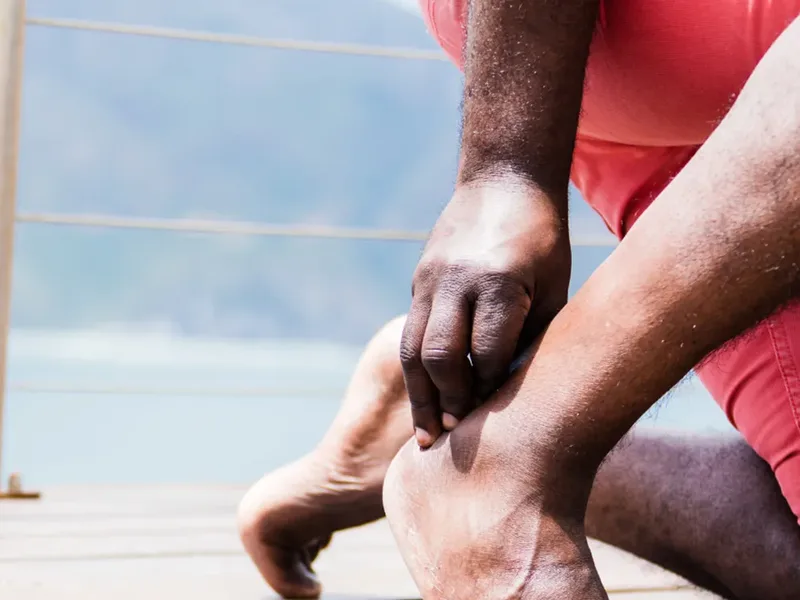
A sprain stretches or tears the ligaments that hold the ankle together. Even a "mild" sprain leaves the ankle less stable if it was never fully rehabbed. Months or years later, the ankle still feels weak, swells easily, or gives way without warning. Incomplete healing is not permanent, but it takes targeted work to restore the balance and proprioception the ankle lost.
The plantar fascia is a band of tissue running along the sole of the foot. When it is overloaded, strained, or held under constant tension, it inflames and sends sharp pain through the heel and arch, especially with the first steps of the day. The pain comes from a combination of foot mechanics, calf and arch flexibility, and load patterns that repeat every day.
The Achilles tendon connects your calf to your heel and takes the brunt of every step, jump, and climb. When it is overworked without adequate recovery or if your calf is too tight and inflexible, it becomes irritated and painful. Pain in the back of the ankle or heel when walking or running is a clear signal the tendon needs specific loading and mobility work.
How your foot naturally arches and how your ankle sits affects how force travels up your leg with every step. Flat feet or high arches that lack flexibility force other parts of the foot to compensate, leading to pain in the arch, heel, or the outer edge. Improving foot stability and arch control changes how the entire lower leg functions.
New shoes, a change in activity level, or spending more time on your feet can overload feet that were not ready for the change. Tight shoes crowd the forefoot. Shoes without support let the foot collapse. Sudden increases in walking, running, or standing put stress on tissues that are not conditioned for it. The foot adapts, but it needs time and help.
Old foot or ankle injuries can leave scar tissue that limits how the joint moves or how muscles fire. A broken bone that healed but was never rehabilitated leaves the ankle weaker than it was before. Scars from surgery tighten the soft tissue around the joint. Addressing old damage takes specific movement and loading work to restore full function.
Arthritis is a common inflammatory condition of the joints that causes pain. The most common types, osteoarthritis (OA) and rheumatoid arthritis (RA), can both greatly affect the joints of the foot and ankle.
Tarsal tunnel syndrome happens when the nerve that runs from the ankle into the foot becomes pinched and inflamed in the tarsal tunnel.
Bursitis happens when tendons rub against the bursae, the small anti-friction sacs near the joint, causing them to become irritated and uncomfortable.
Tendinitis comes from excessive overuse of the tendons, leaving them inflamed for a long time.
A fracture comes from excessive force or trauma that cracks or breaks the bone. A fracture in the foot or ankle can mean weeks of downtime for proper healing.
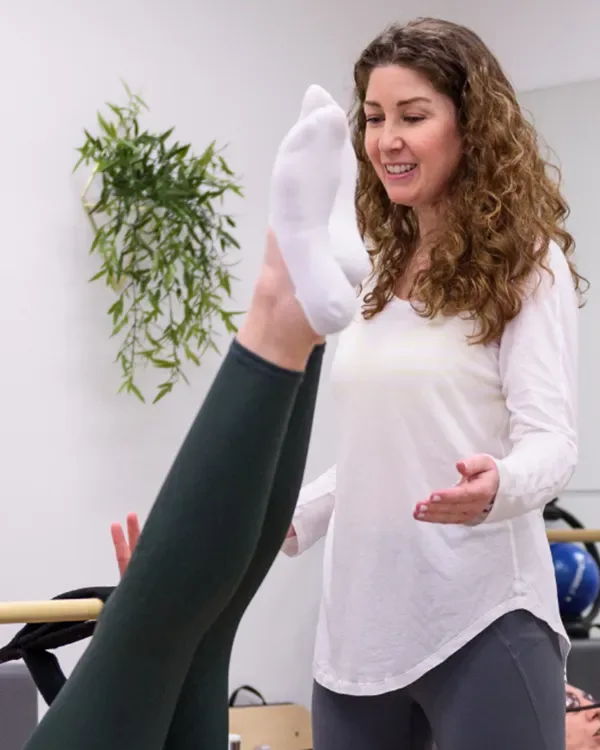
How physical therapy in Cincinnati helps.
Your feet are not meant to hurt with every step. Physical therapy restores the ankle and foot to what they should be: stable, flexible, and able to handle the ground beneath you. We start by finding exactly what has gone wrong, whether it is an old sprain, arch collapse, calf tightness, or the way you walk. From there, we use hands-on manual therapy to release tight tissue and restore the mobility you have lost. For stubborn tendon injuries and slow-healing bone stress, our team also offers shockwave therapy, a non-invasive option that speeds healing when rest alone has not worked. Once the pain settles, we rebuild the strength and control your foot and ankle need through targeted loading and Pilates-based strengthening, the kind of full-body stability work you will not find at most PT clinics. The goal is not just pain relief in the clinic. It is a foot and ankle that hold up under everything your life asks of them.
If you have an acute injury, your therapist may prescribe RICE (rest, ice, compression, and elevation) for the first few days to bring the swelling down, then move you into specialized physical therapy treatments. If your problem is a chronic condition, you begin with those treatments right away. Your plan may include exercises and stretching to restore joint mobility, improve balance, and strengthen the muscles of the foot and ankle, exercises on a balance board, ice and heat therapies, manual therapy, ultrasound, or cold laser therapy. We will do all we can to ease your pain and boost your circulation, and we may recommend lifestyle changes or orthotic footwear to prevent future problems.
What to expect from your recovery.
Evaluation
We assess how your foot moves, how you walk, and where the pain comes from. We check your ankle stability, your arch, your calf flexibility, and how your whole leg works together. You leave understanding exactly why your foot hurts and what we are going to do about it.
Hands-on care and mobility
We use manual therapy and targeted stretching to release tight muscles in your calf, foot, and ankle. We restore the flexibility your foot has lost so it can move and function the way it was built to. Each session builds on the last.
Strength and stability
As pain drops, we rebuild. Using targeted strengthening and Pilates-based control work, we improve your balance and teach your foot to support you through everything your life requires. The strength we build is what keeps the pain from returning.
I had just a few visits with Larisa Durrenberger to do Shockwave therapy on my broken foot that wasn't healing. After 4-6 visits my doctor declared it “fully healed,” an incredible result.
Pain rarely travels alone.
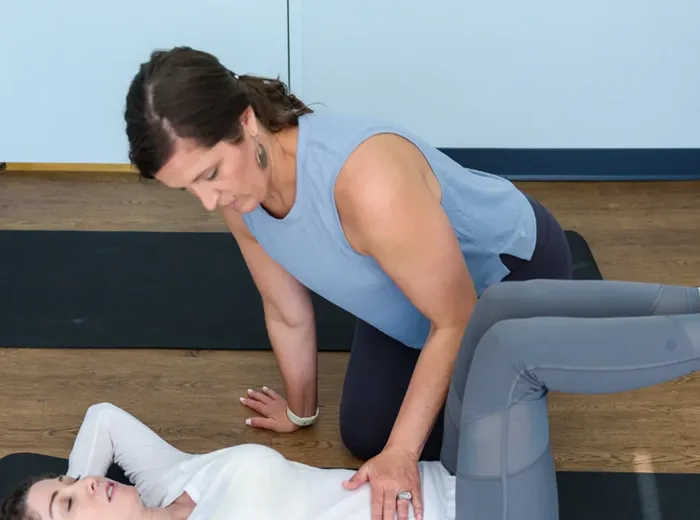
Hip & Knee Pain
When feet and ankles do not work right, the knee and hip often compensate and end up in pain. We treat the whole chain.

Balance & Gait Disorders
Balance problems often start with weak or unstable feet and ankles. Restoring foot strength restores balance.

Sports Injuries
Ankle sprains and foot injuries are common in sports. Real recovery means strength and stability that lasts.