Myofascial Release in Cincinnati
Gentle release that frees restrictive fascia and unlocks movement you thought was gone. It is built for pain that spans large areas and limits everyday life.
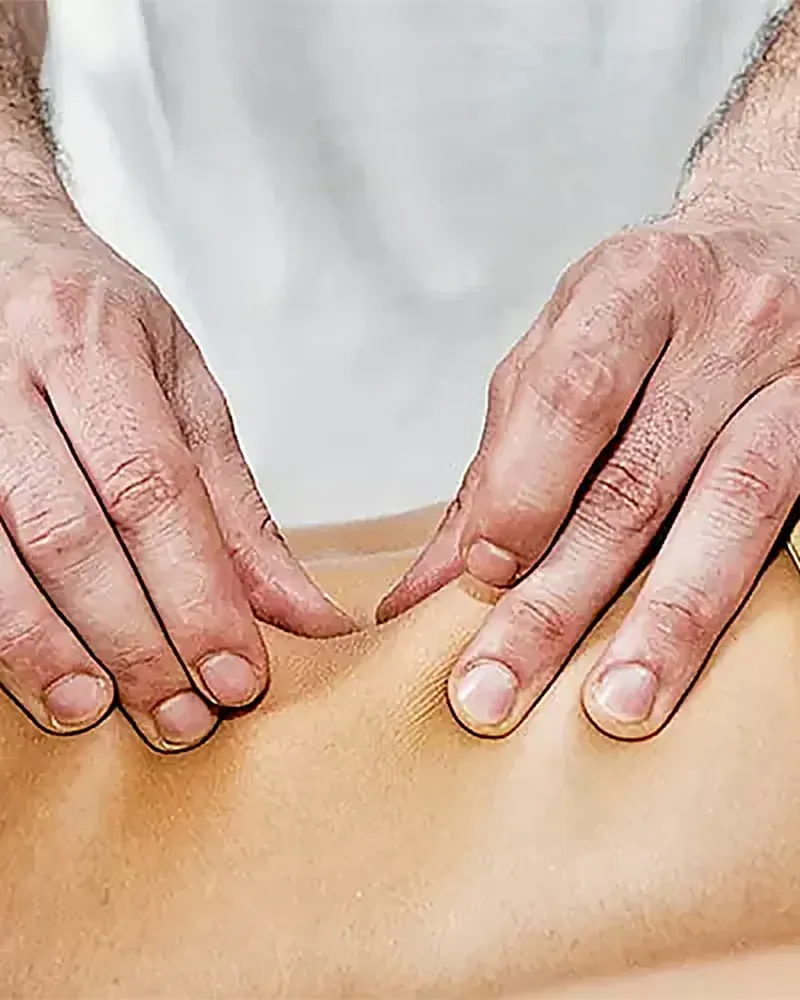
What is myofascial release?
Myofascial release is gentle, sustained pressure on the tissue that wraps and surrounds your muscles. This fascia can get tight, tangled, and restrictive, pulling you out of alignment and turning on pain signals across whole regions of your body. Myofascial release works by applying steady, patient pressure to these restricted areas, waiting for the tissue to soften and release. Unlike a quick massage, this is slow work that respects how tissue actually heals. A therapist uses their forearms, hands, or specialized tools to apply the pressure. You feel the restriction ease and your body suddenly remembers what full movement feels like. The results are often dramatic. People come in unable to rotate their spine and leave moving freely. It is especially powerful for pain that spans a large area or seems to come from everywhere at once. Because fascia connects continuously throughout the body, a restriction in one region can quietly pull on areas far from where you actually feel pain, which is why this technique often looks beyond the obvious spot.
The key is patience. Fascia releases on its own timeline, not the therapist's schedule. Rushing does not work, which is why real myofascial release takes time and skill. A therapist trained in this approach learns to feel for the exact moment tissue begins to yield, and to hold there rather than pushing past it, which is what makes the release lasting instead of temporary.
Sessions typically last 30 to 60 minutes, depending on your needs. At WAVE, we commonly use myofascial release for chronic back, neck, and shoulder pain, fibromyalgia, TMJ disorders, carpal tunnel syndrome, headaches and migraines, sports injuries, postural problems, and sciatica.
Who it's for.
Myofascial release is for anyone with broad, diffuse pain or restriction that seems to involve whole regions of the body. If your pain spans an area rather than a single spot, this technique often helps.
Widespread tension from poor posture or injury
Your entire upper back is tight, or your whole leg feels restricted. Myofascial release breaks up the fascia that is holding tension across the whole region and unlocks movement. This broader approach often succeeds where spot treatment on a single muscle has fallen short.
Pain that spreads across multiple areas
You have neck pain that radiates down your arm, or low back pain that seems to involve your hip and leg. Fascia is often the connecting tissue linking these areas. Treating the whole chain, not just the loudest symptom, is usually what finally brings relief.
Stiffness after sitting, travel, or overuse
Your body feels frozen from repetitive posture or activity. Myofascial release resets the tissue and restores the fluidity that helps you move without pain. It is especially useful for the kind of stiffness that seems to settle in gradually over weeks rather than from a single event.
What to expect in a session.
Myofascial release sessions are slow and deliberate. You will feel pressure and often a slow release as tight tissue softens and lengthens.
Assessment and positioning
Your therapist assesses movement and finds the areas of restriction. You position yourself comfortably for the work, and the therapist explains what you will feel. This mapping step often reveals connections between areas you had not thought to link together.
Sustained pressure and tissue release
Using hands or tools, the therapist applies steady pressure to the restricted fascia. You will feel the tissue gradually soften and lengthen. This takes patience and is never rushed. Some sessions focus on one region the entire time, because that is what genuine release requires.
Movement integration and awareness
As restrictions release, your therapist guides you through movement to remind your nervous system of full range. You leave with awareness of areas to continue releasing at home. This step is what makes the gains from the table translate into how you actually move day to day.
Wear loose, comfortable clothing. Myofascial release can feel intense while happening, but should never cause sharp pain. Soreness in the days after is normal. Drink water after your session to help tissue recovery. Gentle movement in the following days, rather than complete rest, tends to help the results hold.
Lisa Kelly is an absolutely amazing PT! In just a few visits she has helped me tremendously with my low back, neck and pelvic floor!
Where to go next.
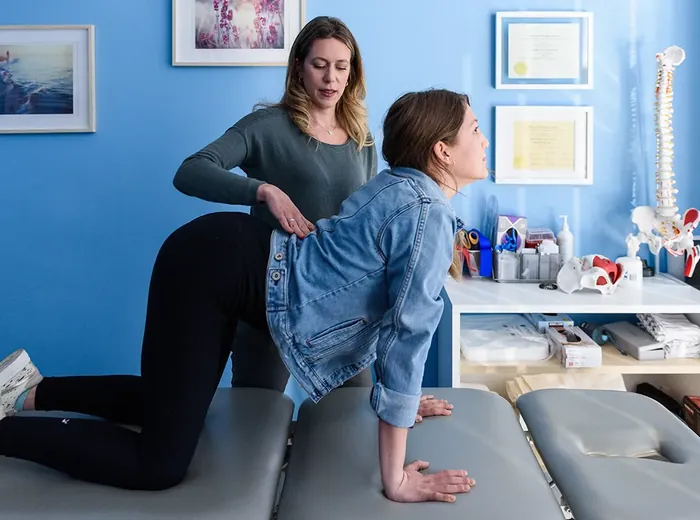
Manual Therapy
Hands-on joint mobilization and soft tissue work to complement myofascial release.
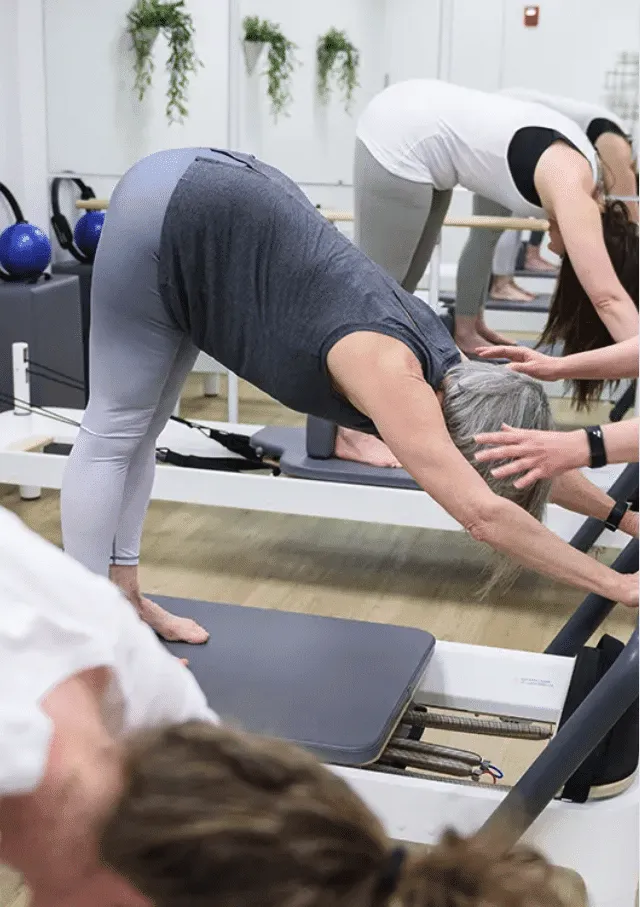
Pilates
Controlled core-strengthening movement that pairs well with myofascial release for lasting mobility.
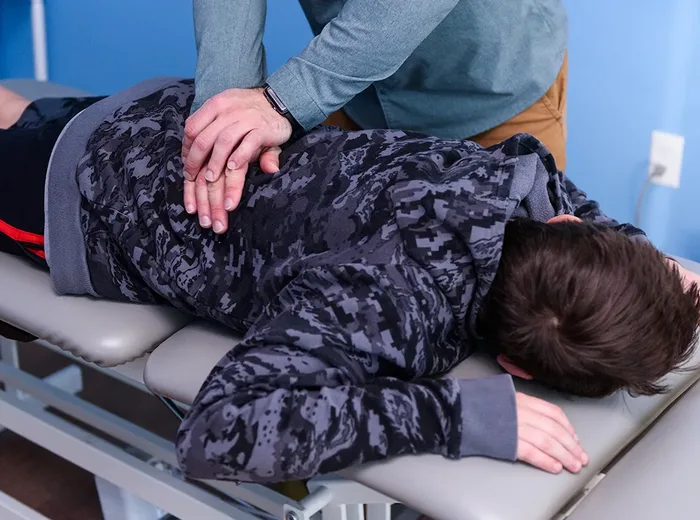
Neck Pain
Neck pain often has a fascial component. Myofascial release addresses the tissue restrictions at its root.
Frequently asked questions.
Myofascial release is a versatile therapy. At WAVE Physical Therapy & Pilates, we commonly use it to treat chronic back, neck, and shoulder pain, fibromyalgia, temporomandibular joint (TMJ) disorders, carpal tunnel syndrome, headaches and migraines, sports injuries, postural problems, and sciatica. This list is not exhaustive, and many patients find relief from other conditions as well. During your initial consultation, we assess your specific needs and determine whether myofascial release is the right approach for you.
Your therapist starts by discussing your symptoms and medical history. You then lie on a comfortable treatment table while the therapist applies gentle, sustained pressure to the affected areas, sometimes held for several minutes to allow the fascia to release, and asks for your feedback throughout to keep you comfortable. Sessions typically last 30 to 60 minutes, depending on your needs. You may feel relief or relaxation right away, and some patients have mild soreness for 24 to 48 hours, similar to what you might feel after a workout. Every patient's experience is unique, and we tailor treatment to your needs and comfort level.
The number of sessions varies depending on your condition, overall health, and treatment goals. Some patients experience significant relief after just one or two sessions, while others with chronic conditions may benefit from ongoing treatment. After your initial assessment, we provide a recommended treatment schedule, and as you progress we continually evaluate your response and adjust the plan as needed. Many patients find that regular sessions help maintain the benefits and prevent the return of pain or restricted mobility.