Back Pain & Sciatica Treatment in Cincinnati
You have rested it, stretched it, and waited for it to pass. If the pain keeps deciding what you can and cannot do, one evaluation is where the plan finally changes.
What causes back pain & sciatica?
Back pain rarely has a single villain. It builds from how you move, how you sit, and how the structures of your spine share load over years. Understanding the real driver behind your pain is the first step to actually fixing it, not just quieting it for a weekend.

When the soft center of a spinal disc pushes through its outer wall, it can press directly on nearby nerves. That pressure is what sends pain, and sometimes numbness, down into the hip, buttock, and leg. Many people feel it most when they bend forward, sit for long stretches, or cough. The good news is that discs respond well to the right loading and movement, and surgery is rarely the first answer.
Sciatica is a symptom, not a diagnosis. It describes the sharp, electric pain that travels along the sciatic nerve from the low back through the glute and down the leg. The nerve can get irritated by a disc, a tight muscle, or a narrowing in the spine. Pinpointing the exact source is the whole game, because the fix for a disc looks nothing like the fix for a tight, overworked hip.
Your spine depends on the muscles around it to share the load. When the deep core and hip muscles switch off or fall out of balance, the low back ends up absorbing forces it was never meant to handle alone. Over time that overload turns into stiffness, spasms, and pain. Rebuilding coordinated strength through the trunk and hips takes the pressure off the structures that keep flaring up.
Modern life keeps us folded into chairs for hours, and the low back pays the bill. Sustained sitting loads the discs, shortens the hip flexors, and lets the postural muscles go quiet. It is rarely one bad moment that causes the pain. It is thousands of small hours in the same position. Changing how you sit, move, and break up your day is often a bigger lever than any single stretch.
Discs lose water and height as the years pass, and the joints of the spine work harder as a result. This is a normal part of aging, and it shows up on scans of plenty of people with zero pain. Degeneration itself is not a life sentence. The aim is to keep the surrounding muscles strong and the joints moving well, so the spine stays resilient and comfortable at any age. People with degenerative disc disease typically report dull, aching pain in the lower back and difficulty with prolonged standing or walking.
Sometimes it is obvious: a heavy lift with a rounded back, an awkward twist, a slip that jars the spine. The tissues get overloaded faster than they can adapt, and they protest. Acute strains are painful but usually settle quickly with the right early movement instead of prolonged rest. The bigger goal is learning to load, lift, and move so the same injury does not keep finding you. Back pain can also follow a more serious sudden trauma, such as a motor vehicle accident, or build from repetitive straining, like leaning down again and again to pick up a toddler.
They differ but are often confused. Back pain is specific to the upper, mid, or low back. Sciatica is a more diffuse, radiating pain down the buttock, thigh, and sometimes the leg, along the sciatic nerve, which runs from your lower back through the buttocks and legs to the bottom of each foot. When that nerve is compressed or irritated it can cause a shooting, stinging, or burning sensation. Back pain can be acute (short-term) or chronic (typically lasting three months or longer).
Radiculopathy is radiating numbness, tingling, burning, or sharp pain into a specific part of the leg. It is often associated with a herniated disc, or with entrapment of a nerve as it exits the spine. Sciatica's technical name is lumbar radiculopathy, and it most often develops between ages 30 and 50.
Sciatica can result from many types of injuries, including arthritis, bone spurs, or any other injury that affects the sciatic nerve. Most commonly, we find people lose flexibility in the hips and pelvis, which tightens the gluteal and hip muscles. That alters spinal mechanics and compresses the sciatic nerve as it travels through those tissues.

How physical therapy in Cincinnati helps.
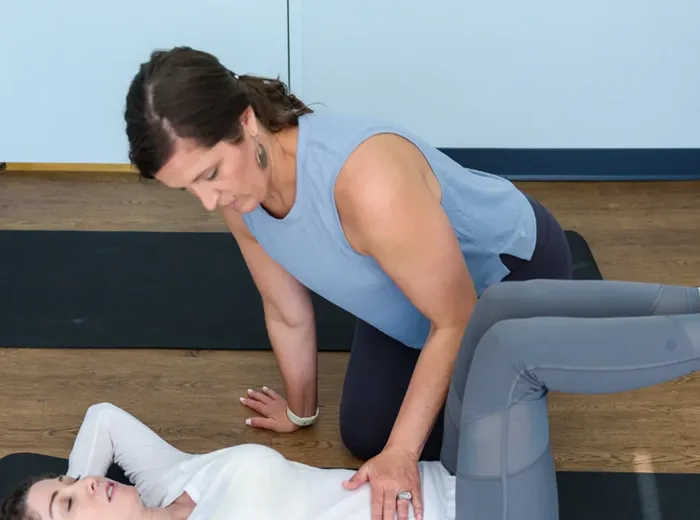
Here is the part most people never hear: back pain is one of the most treatable conditions we see, and it almost never needs to start with imaging, injections, or surgery. A skilled physical therapist finds the true source of your pain through a hands-on evaluation, then builds a plan that addresses it directly. Early on, that means calming the pain and getting you moving again with manual therapy and targeted, gentle movement. As things settle, the focus shifts to rebuilding the strength and control your spine needs to hold up to real life. You are not handed a generic sheet of stretches and sent on your way. Every session is one on one with your therapist, and the plan changes as you do. The result is not just less pain today. It is a back that can handle sitting, lifting, and living without flaring up the moment you let your guard down.
For most people back pain comes and goes, but the underlying problems of poor joint movement, core weakness, and poor muscle coordination can set you up for a future injury that is significantly worse. Treatment starts with quick pain relief, then builds core strength with specific therapeutic exercises and stretches to improve strength and range of motion and prevent re-injury. We also teach ergonomics and posture so you know how to care for your spine and avoid future problems. If you have sciatica, we add specific leg stretches to loosen the sciatic nerve, which restores its natural health and quickly reduces symptoms. Do not rely on medicine to mask the symptoms. Physical therapy should be your first treatment of choice, and it can eliminate your need for harmful painkilling drugs such as opioids and may help you avoid an invasive surgical procedure.
What to expect from your recovery.
Evaluation
Your first visit is a full hands-on assessment. We watch how you move, test where the pain comes from, and rule out anything that needs a referral. You leave with a clear explanation of what is driving your symptoms and an honest timeline for recovery.
Hands-on plan
Next we get to work relieving pain and restoring movement. Manual therapy, targeted mobility, and gentle loading calm the irritated tissues so you can move with confidence again. Every technique has a reason, and we tell you what it is.
Progressive strengthening
As the pain settles, we rebuild. Progressive strengthening for your core, hips, and back teaches your spine to handle load the way it was built to. This is the phase that keeps the pain from coming back once you leave.
I've had lower back and sciatica pain for over 2.5 years, and Larisa helped me more in just 3 sessions.
Pain rarely travels alone.
Hip & Knee Pain
When the hips and knees stop sharing load well, the low back often takes the hit. We treat the whole chain.

Joint Pain
Stiff, aching joints that limit your day. We restore the mechanics first, then build the strength.

Headaches
Tension that starts in the neck and spine can drive stubborn headaches. Relief starts with the source.
Frequently asked questions.
You should get evaluated if your back pain or leg symptoms last more than a few days, keep coming back, or make it hard to sit, stand, sleep, or do normal activities. Pain that travels into the buttock, thigh, or leg, numbness or tingling, or needing to baby your back all the time are also signs you should not just wait it out. At WAVE Physical Therapy & Pilates, our therapists can help you figure out what is causing your pain and whether physical therapy, imaging, or a referral to another provider is most appropriate.
Back pain is a general term that can come from the joints, discs, muscles, or ligaments in the spine. It may stay in the middle or one side of your back. Sciatica happens when the sciatic nerve (or one of its roots) is irritated or compressed, usually in the lower back or pelvis. This often causes pain, numbness, tingling, burning, or shooting sensations that travel into the buttock, thigh, calf, or foot. At your evaluation, your WAVE therapist will test your movement, strength, and nerve function to see whether your symptoms are coming from the back, the sciatic nerve, or both.
In many cases, yes. For a large percentage of people, back pain and sciatica improve with a targeted physical therapy plan that restores joint mobility, reduces nerve irritation, and strengthens the core and hip muscles that support the spine. At WAVE, we focus on finding the root cause of your symptoms, such as stiffness, weakness, posture, or movement habits, so you are not just relying on pain medication or injections. If we feel your symptoms need urgent medical or surgical attention, we will say so clearly and help guide you to the right provider.
Timelines vary depending on how long you have had symptoms, how severe they are, and whether there is nerve involvement. Some people notice changes in pain and movement within the first few visits. Others with long-standing or more complex problems may need several weeks of consistent therapy. A common starting point is 1 to 2 visits per week for 4 to 8 weeks, with specific home exercises between sessions. At your first appointment, your WAVE therapist will give you a realistic plan and explain what kind of progress to expect along the way.
In most cases, controlled movement is better than complete rest. Long periods of bed rest can actually make back pain and sciatica worse by weakening muscles and stiffening joints. At WAVE, we help you understand which movements are helpful, which ones to temporarily avoid, and how to modify walking, lifting, and exercise so you stay as active as possible while your back and nerves calm down. Your program may include gentle mobility work, core and hip strengthening, posture training, and a gradual return to the activities you enjoy.