Parkinson's does not have to mean accepting a smaller life. The right movement program slows how much function you lose and gives you back control over your day.
Parkinson's disease affects the nervous system's control over movement, which shows up as tremor, stiffness, slower movement, and balance changes that build gradually over time. There is no cure, but the research on physical therapy for Parkinson's is some of the most encouraging in all of neurological rehab. Consistent, targeted movement genuinely changes the trajectory of the disease, not just how you feel about it.

Parkinson's often causes muscles to stay tense even at rest, which limits range of motion and makes movement feel effortful. Stretching and mobility work directly counteract this stiffness.
Messages from the brain to the muscles slow down, making everyday tasks like standing up or turning around take longer and require more conscious effort. Specific exercise protocols retrain the nervous system to move with bigger, faster intent.
Parkinson's affects the automatic balance reactions that normally keep you upright without thinking about it. This is the single biggest driver of fall risk, and it is also one of the most trainable symptoms.
Steps often shorten and shuffle, and some patients experience freezing, where the feet feel stuck to the floor mid-step. Gait training with specific cueing strategies is one of the most effective tools for this exact problem.
As symptoms make movement harder, activity naturally decreases, and that inactivity accelerates the very decline it is trying to avoid. Staying in structured movement is what breaks that cycle.
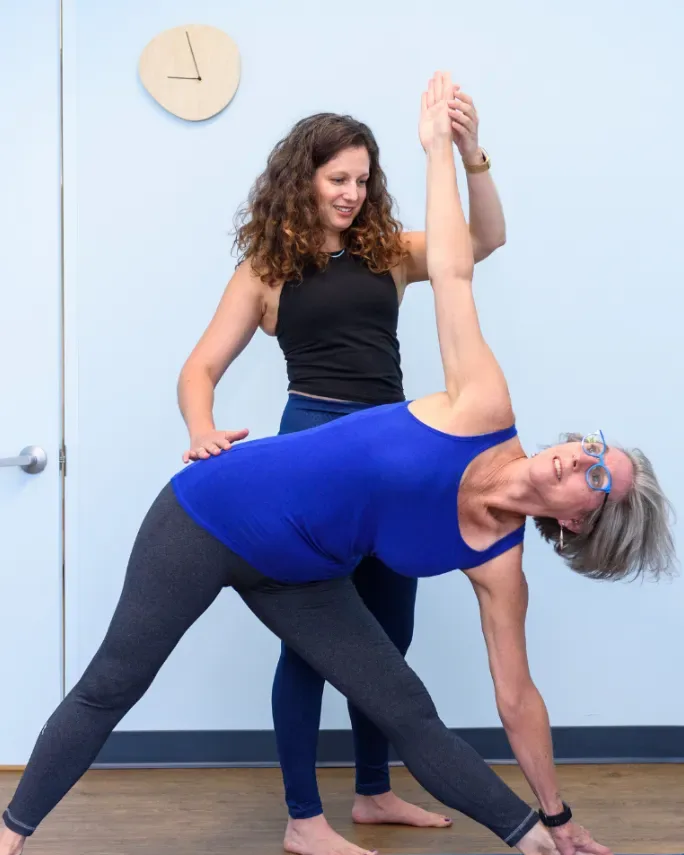
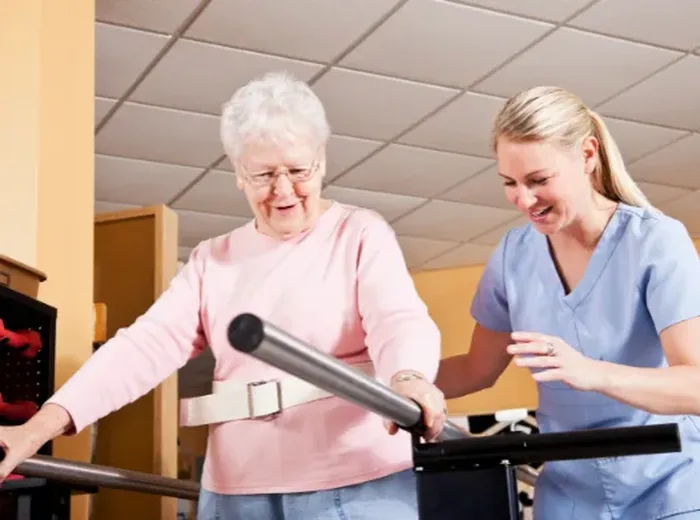
Physical therapy for Parkinson's is not generic exercise. It uses movement strategies specifically built for a nervous system that has trouble initiating and scaling movement, focusing on bigger, more deliberate motion patterns, balance training that targets the automatic reactions Parkinson's disrupts, and strengthening that keeps you mobile and independent longer. We start with a full evaluation of your balance, gait, strength, and flexibility, then build a program around your specific stage and goals, whether that is staying safely mobile at home or getting back to activities you love. Consistency matters enormously here. The patients who see the most benefit are the ones who stay in a structured movement program long term, not just during flare-ups.
Our approach to Parkinson's still follows the Pain, Prime, Perform, Prevent framework we use across the practice, adapted for a progressive condition: manage stiffness and discomfort, prime the nervous system for bigger and more confident movement, perform the daily tasks and activities that matter to you, and build a maintenance routine that helps prevent the fastest declines in function. With a one-on-one model, your therapist gets to know your specific presentation and progression rather than applying a generic protocol, which matters enormously with a condition where every person's symptoms and pace look a little different.
We assess your balance, gait, strength, and movement patterns to build a program specific to your stage and goals.
Sessions focus on bigger, more deliberate movement, balance retraining, and strengthening the muscles that keep you upright and mobile.
We build a sustainable plan, including home exercises, to help you maintain function and independence over time, not just during active treatment.
Sarah Crawford is not your run of the mill physical therapist. She's exceptional. Sarah stays current with all new techniques to better help her clients. I've been in PT off and on for the last 20 years for various injuries. Never have I had a more caring and competent doctor.

Balance changes are central to Parkinson's. We train the same systems with the same evidence-based tools.

Balance and dizziness often overlap. We evaluate both together when symptoms are connected.

Rigidity and joint stiffness often travel together with Parkinson's. We address both in one program.