


By Dr. Sarah Crawford, PT, DPT, COMT, CMTPT
What Balance Pad Training Actually Trains, and Who Benefits Most
You step off a curb you’ve stepped off a thousand times, and for half a second your ankle wobbles and your stomach drops. Nothing happened. But you noticed.
That moment is worth paying attention to—not because it means something is wrong, but because balance is a skill, and like any skill, it responds to practice. Lately, one of the most talked-about tools for that practice is a squishy foam rectangle that costs less than a pair of shoes.
At WAVE, we’re generally skeptical of any product marketed as a solution. But balance pads are one of the rare pieces of equipment that genuinely earn their place in a rehab plan—as long as you understand what they do and, more importantly, what they don’t.
What Is a Balance Pad, and How Does It Work?
A balance pad is a thick, dense foam cushion you stand, kneel, or place your hands on to create an unstable surface. That instability is the entire point.
On a firm floor, your body can hold a position with relatively little effort. On foam, the surface gives and shifts under you, so your body has to make constant micro-corrections to keep you upright. As physical therapist Dr. Jacob Van Den Meerendonk explained in HuffPost’s coverage of balance pad training, the unstable surface means your muscles have to continuously adjust while your brain integrates information from your vision, inner ear, and body to keep you stable.
In other words, you’re not just training muscles. You’re training the conversation between your nervous system and your body.
Why Do Older Adults Benefit So Much From Balance Training?
Because balance training targets the exact systems that tend to decline first.
Falls are one of the leading causes of injury in older adults. And the abilities that typically break down before a fall happens are specific and trainable: ankle stability, reaction time, and the capacity to make quick postural corrections when something unexpected happens. Balance pad training addresses those directly, which is why it can meaningfully reduce fall risk when it’s practiced consistently.
There’s another reason it works well in midlife and beyond. It’s low-impact, it requires no weight or equipment beyond the pad itself, and it can be modified endlessly. You can start seated. You can stand with two hands on a counter. You can progress to one hand, then fingertips, then nothing at all. That range of entry points matters, because confidence in everyday movement is often what people are really rebuilding.
Is Balance Training Only for Fall Prevention?
No—and this is where balance pads get underrated. Balance is a component of nearly every movement you make, which is why physical therapists use these tools across a wide range of patients.
A balance pad can be used for far more than standing on one leg. Common applications include:
- Squats, lunges, and single-leg work on an unstable surface.
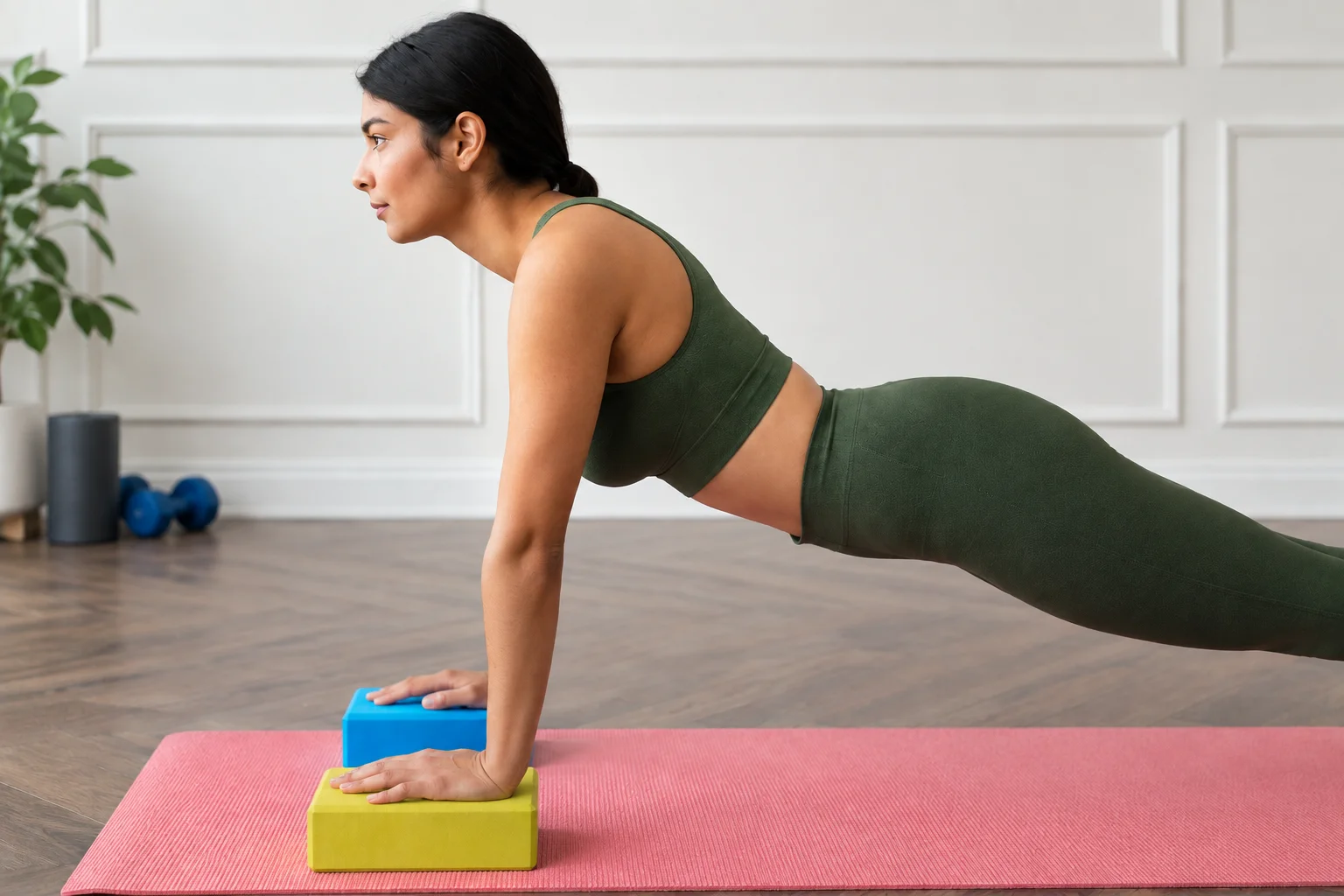
- Planks and push-ups to challenge shoulder stability and core control.
- Ankle stability work after a sprain or lower-leg injury.
- Post-surgical retraining following knee or hip procedures.
- Coordination work for people with neurological conditions.
There’s also a strength benefit that’s easy to overlook. When the surface is unstable, small stabilizing muscles have to fire continuously just to keep you in position, which builds strength in those muscles over time. It also increases the difficulty of an exercise without adding external load—a genuinely useful progression tool for someone who isn’t ready for heavier resistance.
Can a Balance Pad Replace Physical Therapy?
No. It’s a training surface, not a treatment plan.Here’s the distinction that matters most. A balance pad makes an exercise harder. It does not tell you which exercise you need, how often to do it, how to progress it, or whether your balance issue is even coming from your ankles in the first place. Balance problems can stem from vestibular dysfunction, vision changes, medication side effects, hip and ankle weakness, reduced sensation in the feet, prior injuries, or some combination of all of them.
If you’re on a pad doing the wrong exercise for your particular limitation, you’re working hard without working on the problem. Worse, if you’re unsteady and practicing alone without support nearby, you’ve introduced risk instead of reducing it. Practice next to a counter, a sturdy chair, or a kitchen sink—something stable you can reach without thinking.
How Should You Start Using a Balance Pad?
Start easier than you think you need to, and stay consistent rather than ambitious.A few minutes a day of focused practice will do far more than an occasional long session. Build it into something you already do—many people practice single-leg balance while brushing their teeth or waiting for coffee to brew. Begin with two hands supported, hold a position you can control for 20 to 30 seconds, and only reduce your support once that feels genuinely easy. Progress by removing support, narrowing your stance, or closing your eyes—not by attempting something dramatic.
And if you’ve had a fall, a near-fall, or a persistent sense of unsteadiness, that’s worth a conversation with a physical therapist before you shop for equipment. Unsteadiness is information. It’s telling you something about what your body needs.
The Bottom Line
A balance pad is an inexpensive, versatile, genuinely useful tool that trains ankle stability, reaction time, and postural control—the systems most closely tied to fall risk in older adults. But it’s a tool, not an answer. The pad makes practice harder; understanding the root cause of your unsteadiness is what makes practice work.Additionally, a balance pad addresses part of the poor balance equation and should not be done in isolation with the expectation that it will fix every and all balance issues.
If you’ve noticed your balance isn’t what it used to be, or you’re recovering from an injury and want to rebuild confidence on your feet, we’d love to help you figure out what’s actually driving it. At WAVE, our physical therapists take a root-cause approach and build individualized plans—so the work you do at home is the work your body actually needs.
Sources & Further Reading
About the Author
Dr. Sarah Crawford, PT, DPT, COMT, CMTPT
Dr. Sarah Crawford is the founder of WAVE Physical Therapy & Pilates in Cincinnati, Ohio. As a physical therapist and movement specialist, she is passionate about helping patients understand the “why” behind their pain and movement patterns. Through individualized physical therapy, manual therapy, and Pilates-based rehabilitation, Dr. Crawford helps patients build strength, improve mobility, and develop long-term strategies for healthier movement.