


WAVE VO2 Max Testing in Cincinnati
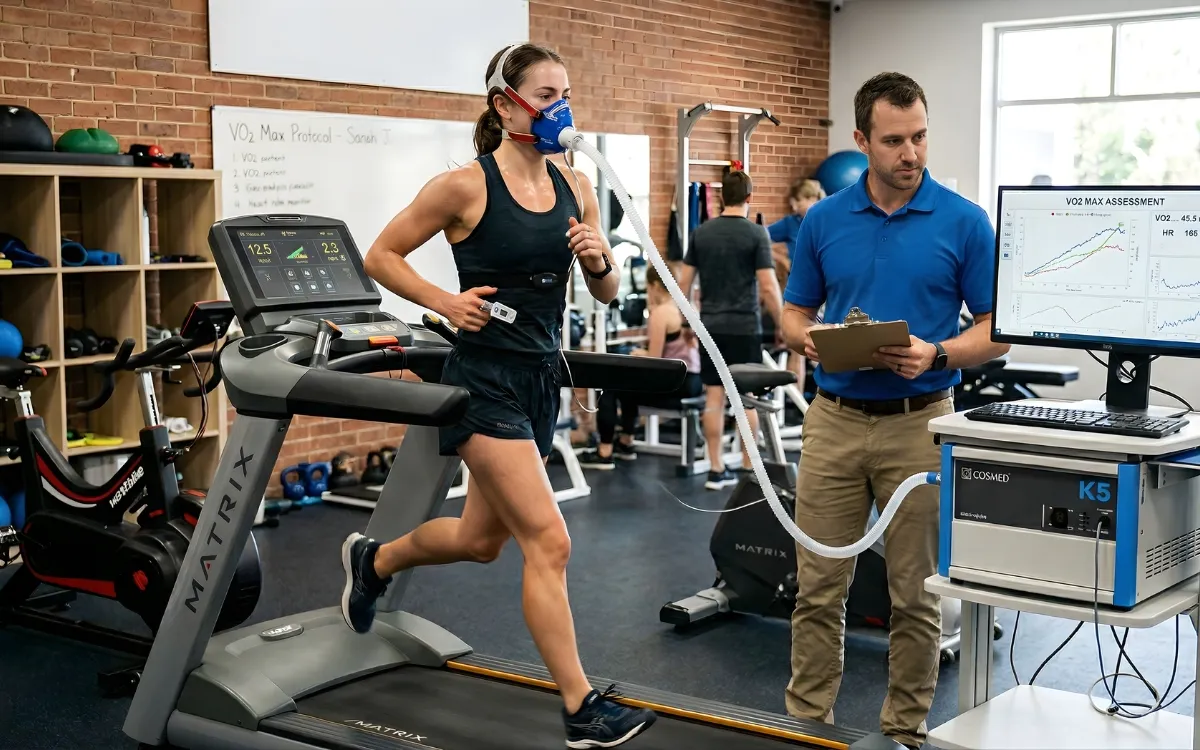
VO2 maxing is the process of increasing your maximum oxygen consumption to improve cardiovascular fitness, longevity, and endurance.
It is achieved through high-intensity interval training (HIIT) that boosts cardiac output and muscle oxygen uptake. Effective methods include 4×4-minute intervals, 8×3-minute intervals, or short 30/30s intervals at 90-95% maximum effort.
Key Strategies for Improving VO2 Max
High-Intensity Intervals (HIIT): The most effective approach, often involving sessions of 3–5 minutes of hard effort, followed by 3 minutes of easy recovery, repeated 3–5 times.
Short Interval Training: Examples include 8-minute sets of 15 seconds hard/15 seconds easy, or 30/30 intervals.
Volume and Intensity Balance: Use a 80/20 approach—80% of training at low intensity and 20% at high intensity—to build a strong aerobic base while still stimulating improvements.
Consistency: Perform high-intensity interval sessions 2-3 times per week, allowing for rest to avoid injury.
Tracking Progress: Utilize wearables to monitor VO2 max trends, but prioritize how your body feels to avoid overtraining.
Commonly Used VO2 Max Workouts
4×4 Method: Four sets of 4 minutes of high-intensity effort (90–95% max effort) with 3 minutes of easy jogging/rest in between.
8×3 Method: Eight sets of 3 minutes of high intensity.
30/30s: 30 seconds of high-intensity work followed by 30 seconds of rest, repeated for 3-4 sets.
Factors Affecting VO2 Max
Genetics: Heredity accounts for 43–72% of the difference in VO2 max values between individuals.
Age and Gender: Generally declines with age; males often have higher values than females.
Body Composition: Lower body fat percentages can facilitate higher relative VO2 max values

Heather L

“Sarah Crawford was very thorough during her initial evaluation of my condition. She listened very carefully to my concerns and responses and certainly has her sights on getting to the root of the problem in order to resolve it. I have great hopes of resuming my normal and even better daily activity function With further treatment under Sarah’s care.”

Brianne F
“I am blown away at the success of Sarah Crawford’s hard work in taking the leap to start a PT business on her own and quickly follow her vision, growing it into the thriving Wellness Center it is now. I am in such good hands physically and mentally with such a talented collection of smart, accomplished and truly friendly professionals. “