


TMJ / TMD In Cincinnati
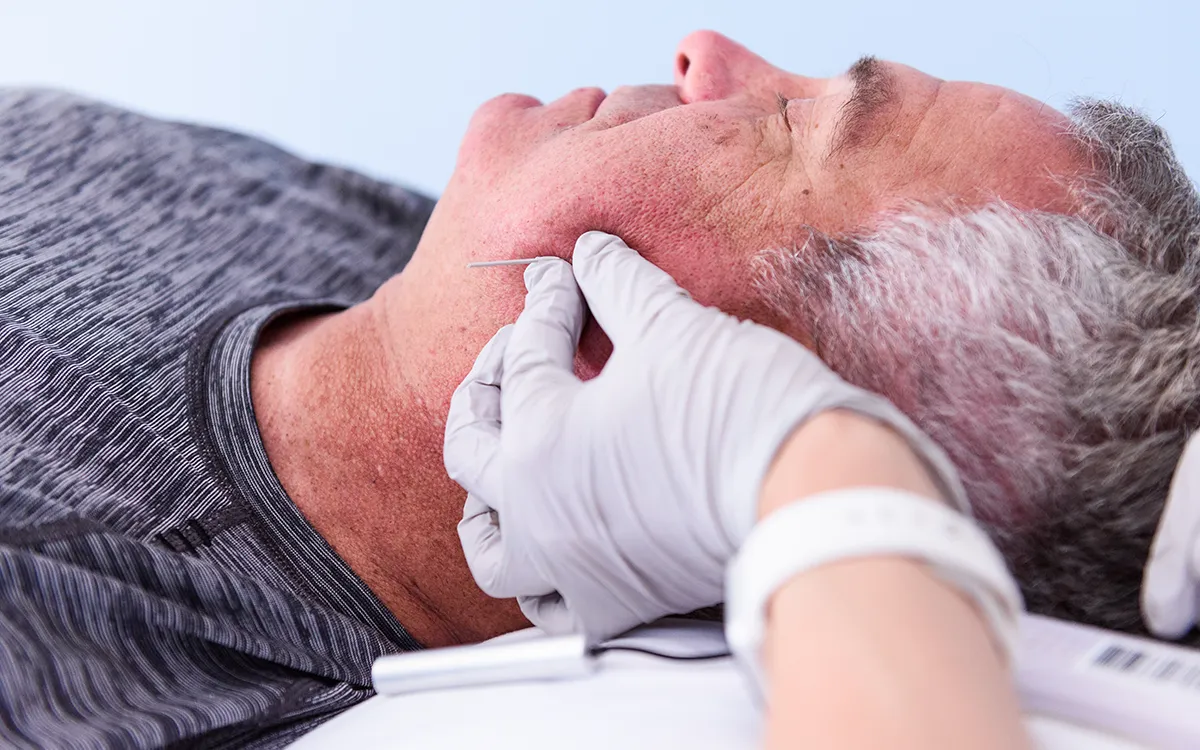
Do you suffer from headaches, grinding of your teeth, clicking of your jaw or even ear pain? These can all be signs of Temporomandibular joint (TMJ) syndrome, also known as temporomandibular joint disorder (TMJD). This is a disorder of the jaw muscles and nerves caused by injury to the TMJ, which is the joint between your jaw and skull. The injured temporomandibular joint leads to pain with chewing, clicking, and popping of the jaw; swelling on the sides of the face; nerve inflammation; headaches; tooth grinding; and sometimes dislocation of the temporomandibular joint.
What causes TMJ syndrome?
Multiple factors contribute to muscle tightness and dysfunction that characterize this condition. Most often, poor posture and neck alignment change the pull of the muscles that make your jaw move. This causes painful grinding and irritation of the TMJ. Other causes may include:
- Poor alignment of or trauma to the teeth or jaw
- Teeth grinding
- Poor posture
- Stress
- Arthritis or other inflammatory musculoskeletal disorders
- Excessive gum chewing
A lot can be done to help TMJ, first starting with a thorough evaluation of your problem with our expert physical therapists. Once the root cause of your problem has been discovered, a comprehensive plan can be developed to quickly relieve your pain and restore natural movement to your TMJ. Furthermore, our physical therapists will teach you techniques for regaining normal jaw movement for long-lasting results.
What happens during a TMD physical therapy evaluation in Cincinnati?
Initial evaluation will take place on your first visit to a PT with TMD/TMJ. The PT will discuss your condition and ask questions about your jaw pain. Your eating habits and any other activities that could cause irritation to your jaw will also be discussed. The PT may also ask you about any previous treatment for TMJ/TMD pain. During the PT evaluation, you may also need to have several tests done in order to determine a baseline measurement.
A PT evaluation could include the following components:
- Measuring the neck and jaw range of motion
- Evaluation of the jaw structures
- Listening to clicks and clicks in a joint environment
- This is the measurement of strength in the jaw and postural muscles
- Assessing your posture
After your evaluation is completed, your physical therapist will talk with you about the results, create a plan for care, and work with you to set goals for your therapy.
What to Avoid
There are some things that you should avoid if you have TMD.
- Use your teeth as tools
- Nervous chewing
- Hard, chewy or crunchy food
- Poor posture
- You should sleep on your stomach
- Teeth grinding
- Stress
What can physical therapy do to help TMD?
TMD is a condition that causes pain in the jaw. TMD can be treated with physical therapy. A TMD certified physical therapist can diagnose the root cause of your pain, and help improve your jaw movement.
Non-invasive treatments are used by physical therapists to reduce pain and restore natural movement in your jaw.
TMD evaluations and treatment are a specialty of Foothills physical therapists. Please schedule an appointment at one of our many valley-wide locations to get a TMD assessment. A personalized care plan with a variety of treatment options can also be created for you. TMD can be effectively managed with physical therapy, even if the symptoms are severe and long-lasting.
FAQs – TMJ / TMD in Cincinnati
How do I know if my jaw pain or headaches are related to TMJ/TMD?
TMJ/TMD symptoms often include jaw pain or tightness, clicking or popping when you open or close your mouth, pain or fatigue when chewing, morning jaw stiffness from clenching or grinding, ear pain or fullness, and headaches around the temples, jaw, or neck. You might also notice your jaw shifting to one side or feeling stuck. At WAVE Physical Therapy & Pilates in Cincinnati, your therapist will assess your jaw, neck, posture, and movement patterns to help determine whether your symptoms are coming from the TMJ, surrounding muscles, or both.
What usually causes TMJ/TMD problems?
TMJ/TMD can be caused by multiple factors, including clenching or grinding (bruxism), stress and muscle tension, poor posture, neck and upper-back alignment issues, arthritis or joint inflammation, jaw or facial trauma, dental changes, and habits like chewing gum or biting nails. Often it is a combination of these factors rather than just one issue. Your WAVE therapist will look at how your jaw, neck, and posture work together to identify what is driving your pain and dysfunction.
What happens during a TMJ/TMD physical therapy evaluation at WAVE?
During your TMJ/TMD evaluation, your therapist will ask about your symptoms, headaches, dental history, sleep, stress level, and habits like clenching, grinding, or chewing. They will then assess your jaw range of motion, how smoothly it opens and closes, joint sounds (clicking or popping), muscle tenderness around the jaw, face, and neck, and your posture and neck mobility. Based on these findings, your therapist will explain what is contributing to your pain and outline a personalized treatment plan and goals.
Can physical therapy help me avoid injections, medications, or surgery for TMJ/TMD?
In many cases, yes. Physical therapy for TMJ/TMD focuses on reducing muscle tension, improving joint alignment and movement, addressing posture and neck mechanics, and teaching you strategies to reduce clenching and stress on the joint. This often decreases or eliminates the need for more invasive treatments. If you already use a night guard or are working with a dentist or specialist, your WAVE therapist can coordinate care to support the best possible outcome.
How long does it take to feel better with physical therapy for TMJ/TMD, and what can I do at home?
Some people notice less tension, pain, or clicking within a few sessions, especially when they consistently follow home strategies. More chronic or complex TMJ/TMD may take several weeks or months of gradual progress. A typical starting plan is 1–2 visits per week combined with home exercises, posture changes, jaw relaxation drills, and habit modifications (like avoiding hard or chewy foods). Your WAVE therapist will give you clear guidance on what to avoid and what to practice at home between visits.
See Our TMD Specialists in Cincinnati
The focus of physical therapy for TMJ is relaxation, stretching, and releasing tight muscles and scar tissue. In most cases, physical therapy can resolve TMJ and prevent the need for surgery. However, in cases where surgery is absolutely necessary, physical therapy is a vital part of the recovery process, as it helps minimize scar tissue formation, muscle tightness and allows for a complete recovery. For more information, Contact us today.
AJ R

“Had my first appointment with Libby for back/neck pain and TMJ. She’s very knowledgeable and easy to talk to. The atmosphere was relaxing. I’ll definitely be going back.”’

Rowan G
“They have provided excellent physical therapy treatment for a TMJ-related issue I experienced. With a combination of dry needling, manipulation, and a prescribed stretching regimen, she efficiently enabled complete resolution of the issue and the associated pain. Her patient-centric, caring, and pragmatic approach is rare and greatly appreciated! I highly recommend her.”